The short version
- AI tools name brands they can describe with confidence from clear, consistent and independent sources.
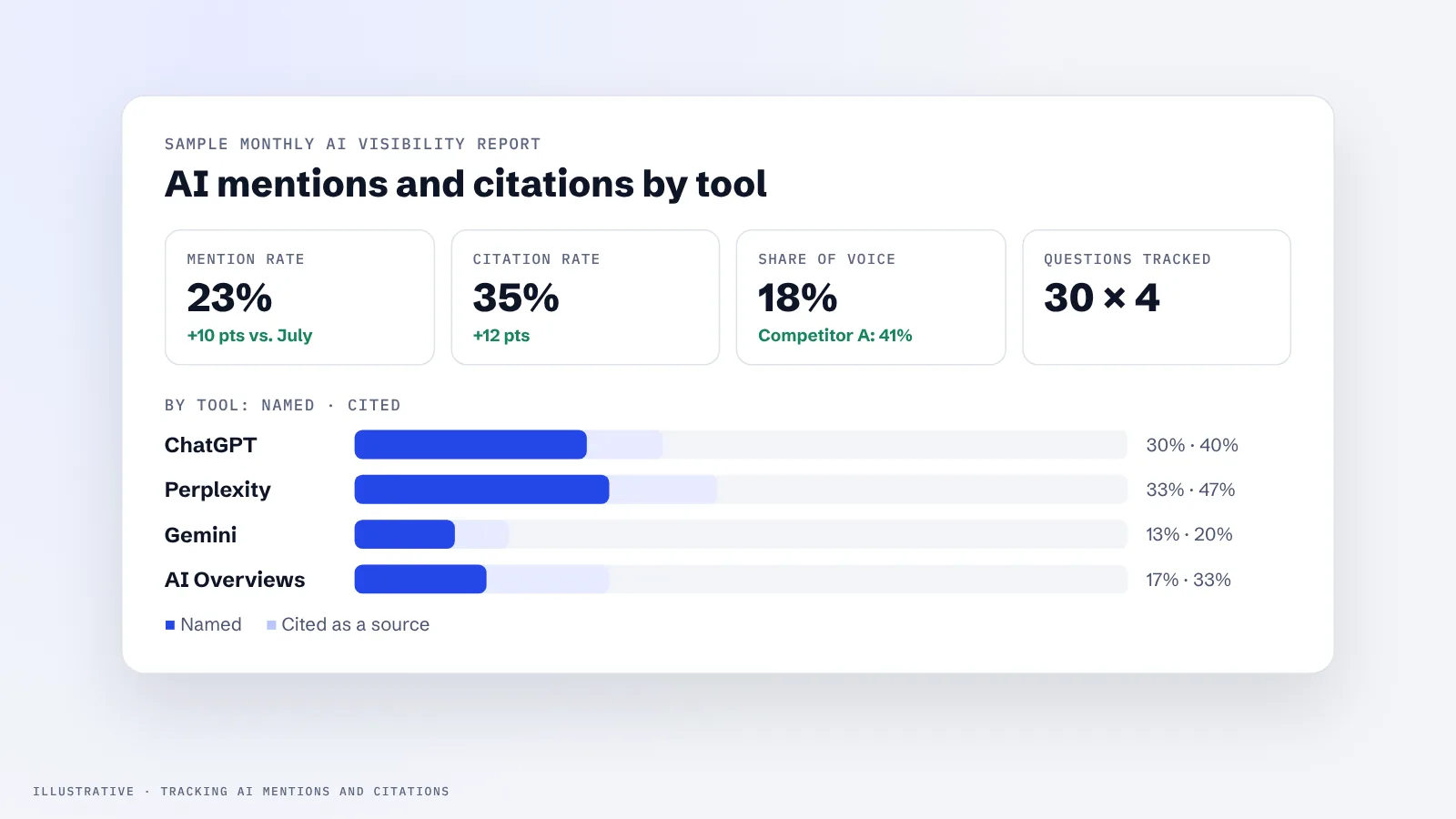
- Start by recording how ChatGPT, Perplexity, Gemini and AI Overviews describe you, and which sources they cite.
- Make your website the clearest source of brand facts and keep those facts identical on every profile.
- Earn mentions on the sites AI tools already cite, and make sure AI crawlers can reach your pages.
To improve your brand visibility in AI search, make your website the clearest source of facts about your business, keep those facts the same on every profile and directory, earn mentions on the sites AI tools already quote, and make sure AI crawlers can reach your pages. Then check the answers every month.
When a buyer asks ChatGPT, Perplexity, Gemini or Google AI Overviews for a recommendation, the tool names a handful of brands. Being one of them is what brand visibility in AI search means. This guide covers why some brands get named and others don't, and the six steps that make the biggest difference, with a 30-day plan at the end. For the wider picture, see what AEO is.
What brand visibility in AI search means
Brand visibility in AI search is how often, and how accurately, AI tools mention your business when people ask questions in your category. It has three parts:
- Mentions. The tool names your brand in its answer, with or without a link.
- Citations. The tool links to one of your pages as a source. We cover the difference in how to get cited in ChatGPT and AI Overviews.
- Accuracy. What the tool says about you is correct: the right services, locations, prices and positioning.
Accuracy is the part most businesses forget. Being mentioned with an old address, a service you stopped offering or a competitor's pricing can do more harm than not being mentioned at all.
Why AI tools mention some brands and not others
AI tools build answers from two places: what the model learned during training, and what it finds on the web when it searches live. In both cases, a brand gets named when the tool has enough clear, consistent and independent information to be confident about it.
In practice, the brands that show up tend to have:
- A website that says plainly what the business does, for whom and where
- The same name, description and contact details across profiles and directories
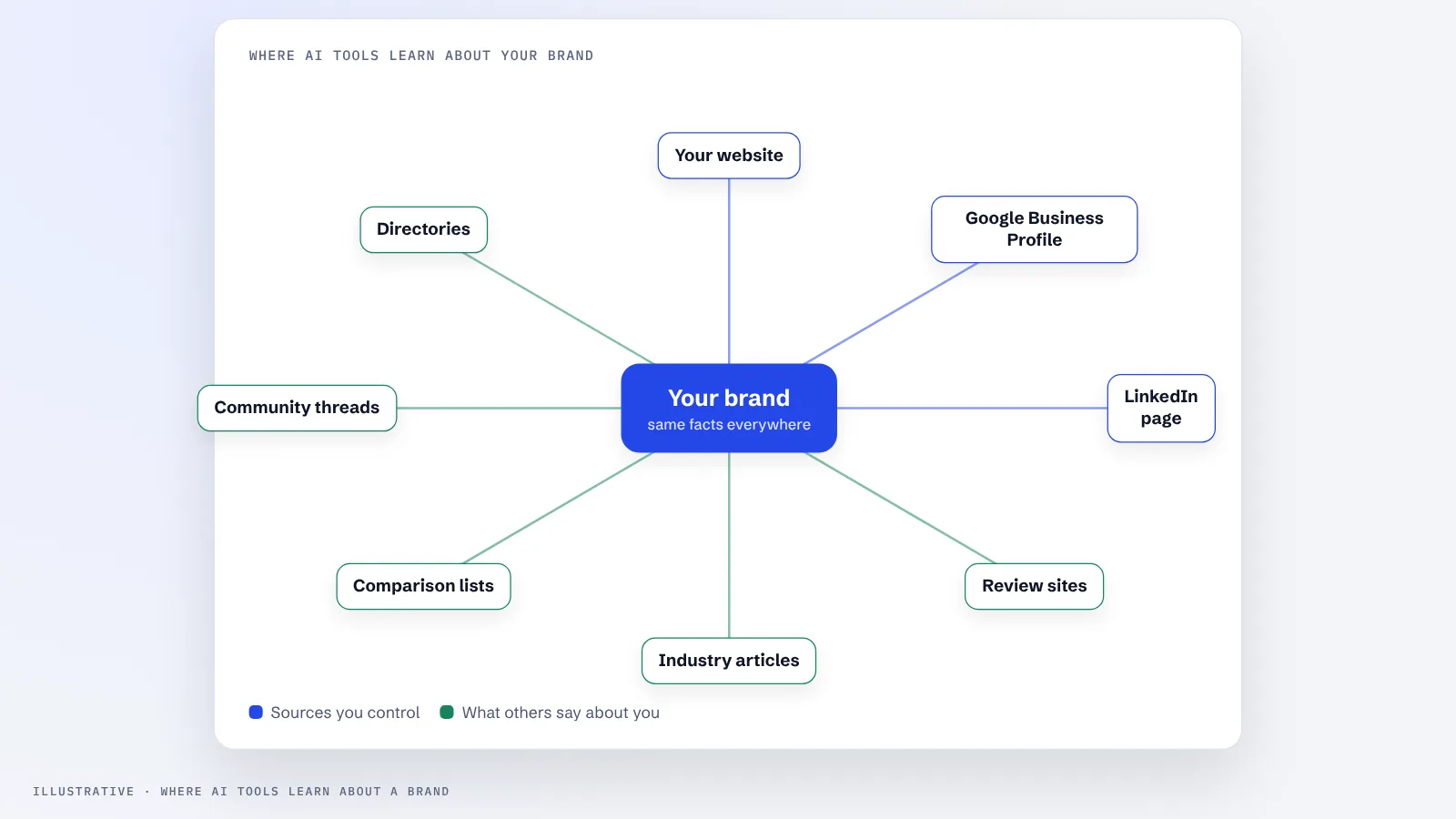
- Mentions on other sites: reviews, comparison articles, industry publications and community discussions
- Pages that answer the questions buyers actually ask, so there is something to quote
- Pages that AI crawlers and search engines can reach and index
A brand that only talks about itself on its own website is hard for an AI tool to trust. A brand that other sources describe in the same way is easy to trust.
Step 1: Check how AI tools describe your brand today
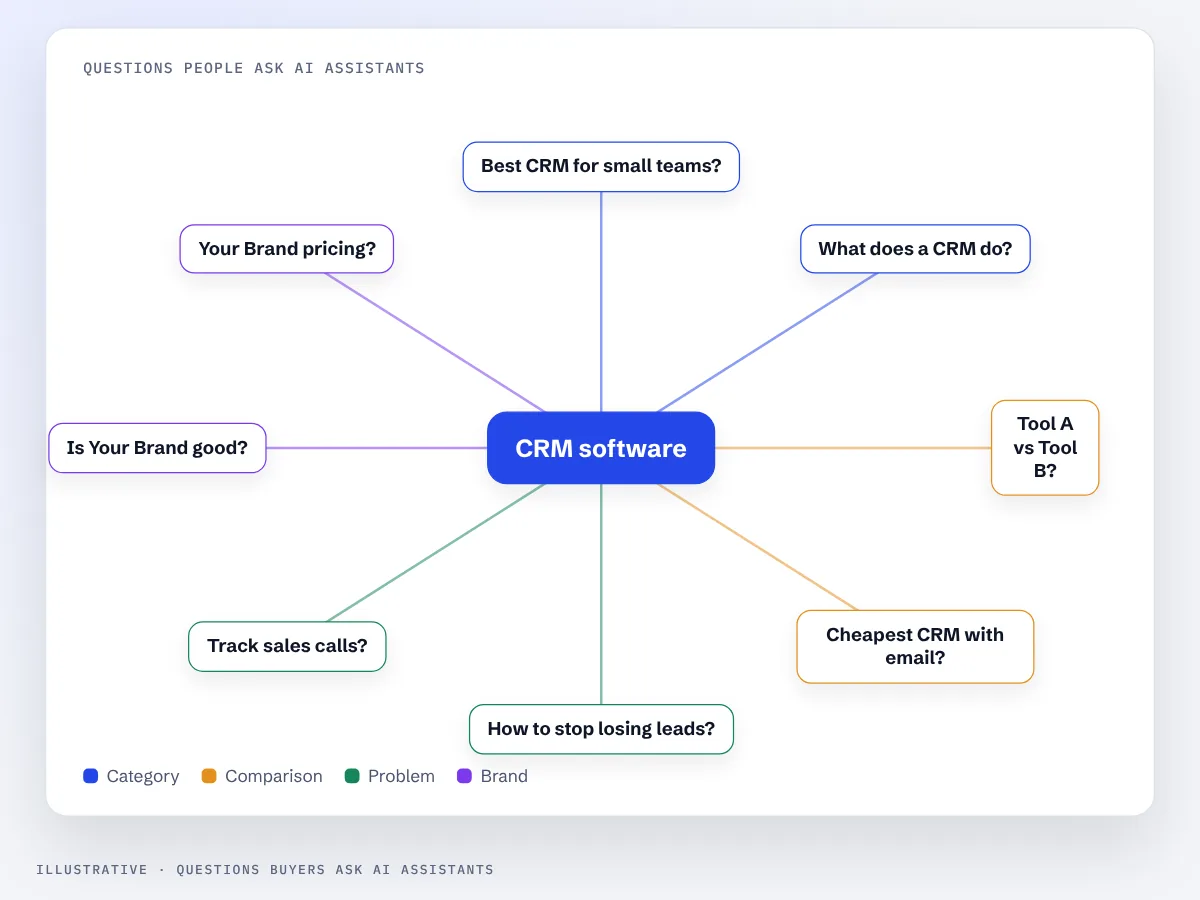
Start with a baseline. Write down 15 to 30 questions in three groups and ask each one in ChatGPT, Perplexity, Gemini and Google (for AI Overviews):
- Brand questions: "What does [your brand] do?", "Is [your brand] any good?", "Where is [your brand] based?"
- Category questions: "Best [service] for [type of customer] in [location]", "Who are the top [category] companies?"
- Comparison questions: "[Your brand] vs [competitor]", "Alternatives to [competitor]"
For each answer, note whether you are named, whether you are linked, what is said about you, which competitors appear and which sources the tool cites. Those cited sources are your shortlist for step 4. Our guide on how to measure AI search visibility has a tracking sheet you can copy.
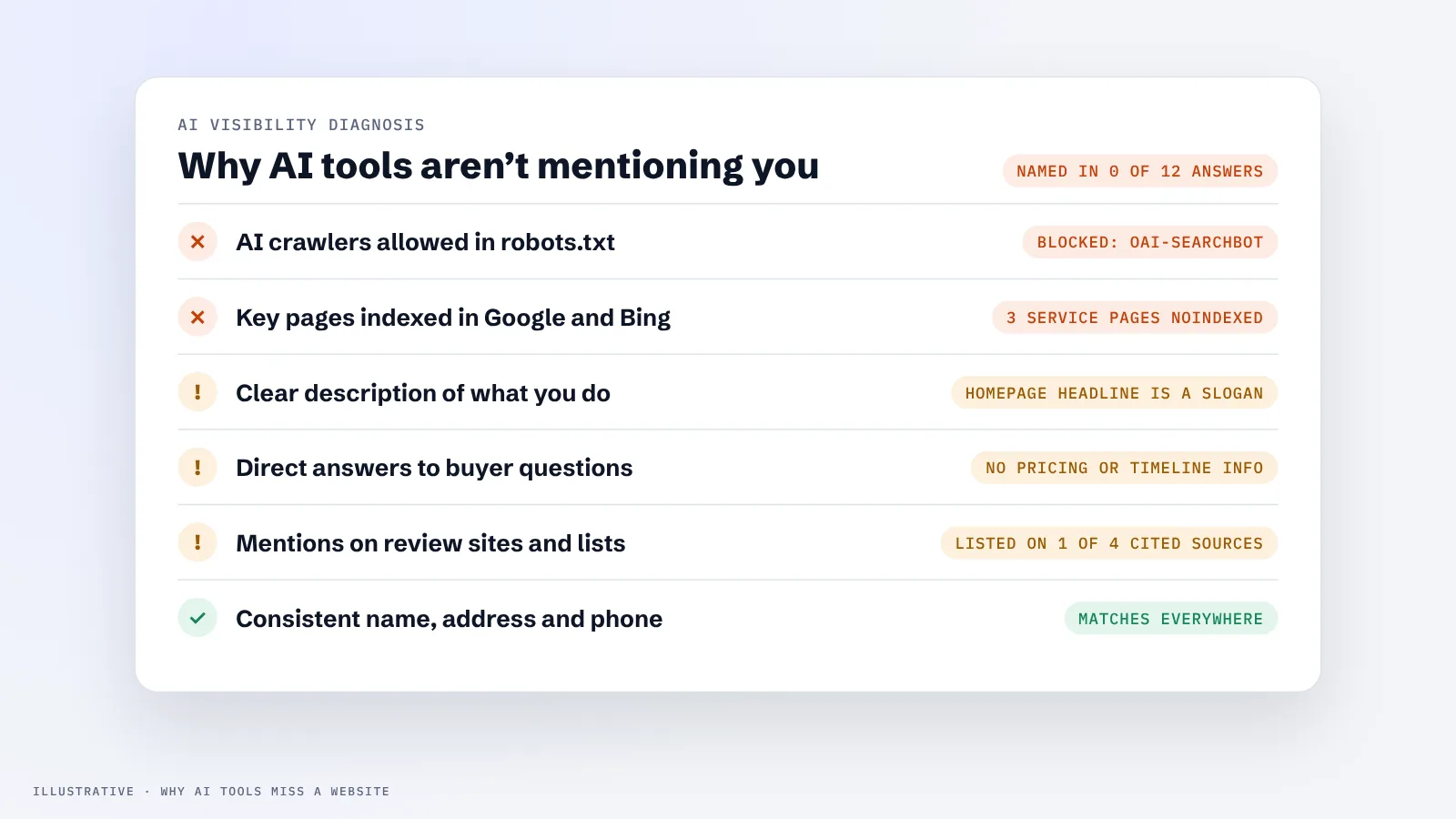
If you appear nowhere, even for questions that use your brand name, the problem is usually technical or about basic information, not content. Why your website is not mentioned by AI search engines walks through the usual causes.
Step 2: Make your website the clearest source about your brand
Your own site should answer every basic question about your business without the reader having to guess. Check these pages first:
- Homepage: one plain sentence near the top that says what you do, for whom and where. "Commercial roofing contractor serving Dallas and Fort Worth" beats "Building a better tomorrow".
- About page: when you started, who runs the business, where you operate, who you serve and what makes you different, stated as facts.
- Service pages: one page per main service, each opening with a direct answer. How to structure website content for AI answers shows the layout.
- Contact page: the same business name, address, phone and email you use everywhere else.
- Author and team pages: real names and roles for the people behind your content.
Then add Organization structured data to your homepage or About page. Google says this markup helps it understand your organization's details and tell it apart from others with similar names. Include your logo, contact details and a sameAs list that links to your official profiles, such as LinkedIn and your Google Business Profile. That list connects your website to the rest of your brand's footprint. If the idea of an entity is new, our glossary explains it.
Step 3: Keep your brand facts the same everywhere
AI tools compare what different sources say about you. When your LinkedIn page, Google Business Profile, directory listings and website all describe you differently, the tool has to guess, and it may pick the wrong version or leave you out.
Check these places and make the facts match:
| Where | What to check |
|---|---|
| Google Business Profile | Exact business name, category, address, phone, website, hours and description |
| LinkedIn company page | Name, one-line description, industry, location, website |
| Industry directories and review sites | Name, services listed, locations served, website link |
| Social profiles | Bio, website link, business name |
| Your own website | Footer, contact page, About page and structured data |
Use your real business name everywhere. Google's guidelines for Business Profiles say your name should reflect your real-world business name and not include extra keywords or taglines, and the same rule makes sense on every other profile. If you have moved, rebranded or stopped a service, update old listings rather than creating new ones next to them.
Step 4: Earn mentions on the sites AI tools already use
Go back to the sources the AI tools cited in step 1. For most categories they fall into a few types: review platforms, "best of" and comparison articles, industry publications, directories and community threads. Being present on those specific sites matters more than being mentioned on many random ones.
Ways to earn those mentions honestly:
- Reviews: ask real customers to leave reviews on the platforms that show up in your answers. Never write or buy them.
- Comparison and list articles: contact the authors of lists in your category with accurate information about what you offer. Some will add you; many won't, and that is normal.
- Industry publications: offer useful expert input, data or a guest article on a topic you know well.
- Directories: get listed in the respected directories for your industry and location, with complete, consistent details.
- Communities: answer questions in forums and groups where your buyers talk, as a real person, without turning every reply into an advert.
- Partners: suppliers, associations and certification bodies often list the businesses they work with. Ask to be included.
Quality and relevance count. One mention in the publication your buyers read does more than dozens of low-quality listings.
Step 5: Publish content that links your brand to buyer questions
AI tools need to see your brand next to the topics you want to be known for. That happens when your site has useful pages on those topics, and when other sites mention you in that context.
- Answer the questions from step 1 on your own site: costs, timelines, how to choose a provider, common problems.
- Write fair comparisons. A page that compares options honestly, including when another choice is better, gets quoted more than a page that only praises you.
- Share something only you have: results from your own projects, real examples, a simple survey of your customers, or numbers from your work. Original facts give other sites a reason to mention you.
- Name the people behind the content and show when it was last updated.
Step 6: Make sure AI tools can reach your pages
None of the steps above help if AI crawlers are blocked. Check your robots.txt for bots such as OAI-SearchBot, PerplexityBot and Googlebot, and look for security or firewall settings that block them without you knowing. Our AI crawler robots.txt generator builds a file that allows the main AI search bots.
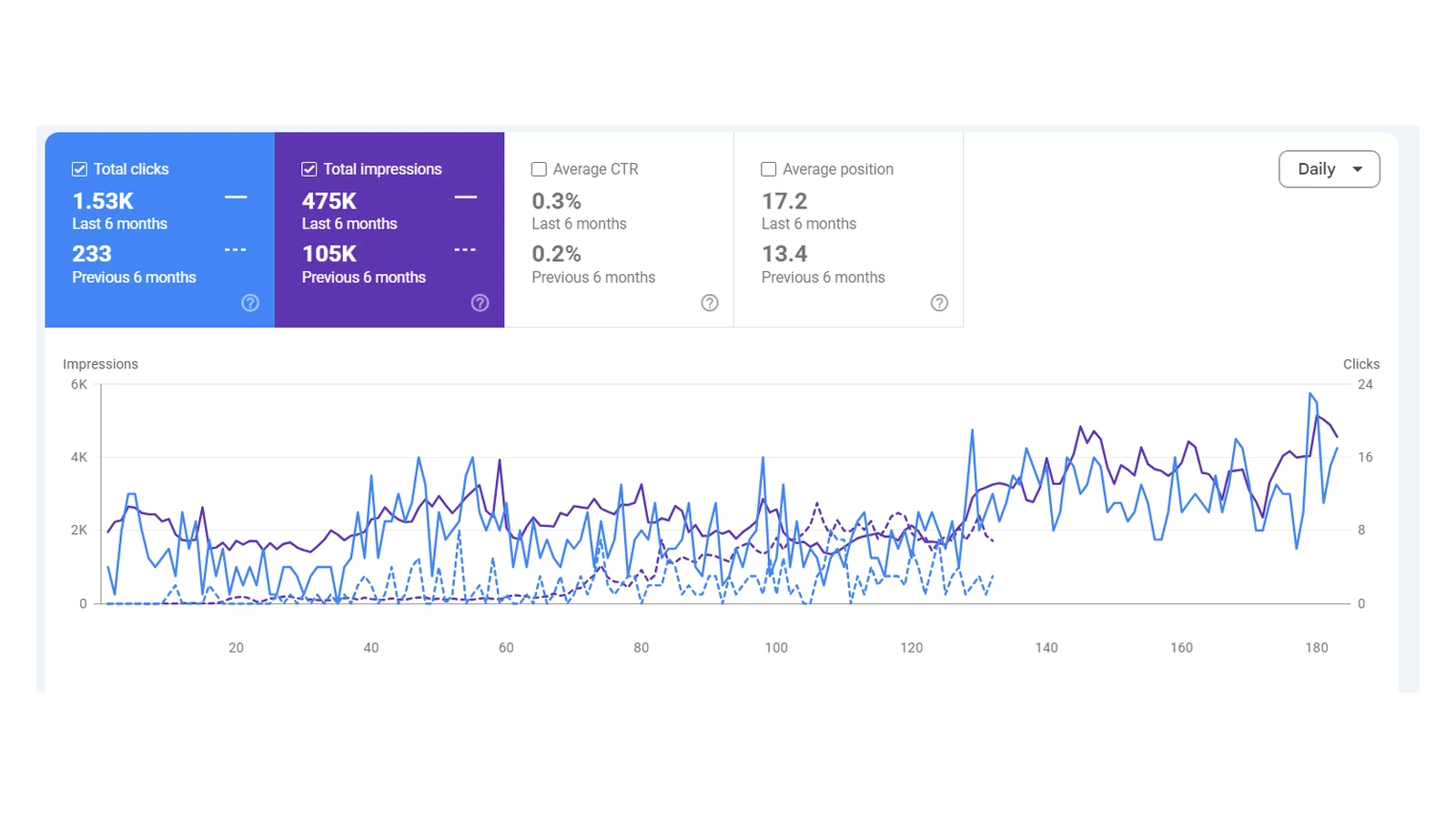
Also make sure your key pages are indexed in both Google and Bing. Some AI tools, including Microsoft Copilot, build their answers on Bing results, and Bing Webmaster Tools now reports when your pages are cited in Copilot and Bing's AI answers. Google says there are no extra requirements for AI Overviews beyond being indexed and eligible to show in search.
What doesn't work
- Repeating your brand name all over your own pages. It makes the writing worse and doesn't create trust.
- Fake or paid reviews. They break platform rules and can get your profile penalized or removed.
- "Best of" lists that only rank yourself first on your own site. AI tools and readers both discount them.
- Buying mentions on unrelated sites. Relevance matters more than volume.
- Relying on one file or trick. An llms.txt file is a reasonable extra, but it won't make up for weak content or missing mentions.
How long it takes to see results
It depends on how the AI tool gets its information. Tools that search the web live, such as Perplexity, ChatGPT search and AI Overviews, can pick up changes once the pages are crawled and indexed, often within a few weeks. What a model learned in training changes more slowly, because it depends on when the model is next updated.
Fixing basic information and access problems usually shows up first. Earning mentions on other sites takes longer, typically several months of steady work. No one can promise that a tool will name your brand for a given question, so judge progress by trends over a few months, not by single answers.
A 30-day plan to get started
| Week | What to do |
|---|---|
| Week 1 | Write your question list and record how each AI tool answers today, including the sources it cites |
| Week 2 | Fix your homepage, About page and contact details, and add Organization structured data with sameAs links |
| Week 3 | Make your Google Business Profile, LinkedIn page and main directory listings match your website |
| Week 4 | Check robots.txt and indexing, publish one page that answers a top buyer question, and contact two cited sources about being included |
After that, repeat the question check every month and add one or two new mentions or pages each month. Our AEO and AI SEO services run this process for businesses that want it done for them.
FAQ
What is brand visibility in AI search?
It is how often and how accurately AI tools such as ChatGPT, Perplexity, Gemini and Google AI Overviews mention your business when people ask questions in your category. It covers mentions of your brand, links to your pages and whether the information they give is correct.
Can I pay to appear in ChatGPT or AI Overviews answers?
Not in the organic answers. Brands appear because the tool finds clear, consistent and trusted information about them. Some platforms are testing ads near AI answers, but those are separate from being recommended in the answer itself.
Why does ChatGPT give wrong information about my business?
Usually because old or conflicting information exists online, such as outdated directory listings, an old address or a profile that describes a service you no longer offer. Update those sources, make your website state the correct facts clearly, and check again after the pages are recrawled.
Do small businesses have a chance in AI search?
Yes, especially for local and niche questions. AI tools often name smaller businesses when the question is specific, such as a service in a particular city or for a particular type of customer, and the business has clear, consistent information and good reviews.
How do I know if my brand visibility in AI search is improving?
Ask the same set of questions in each AI tool every month and record whether you are named, linked and described correctly. Compare the mention rate over three to six months rather than reacting to single answers, which can vary from day to day.
Want to know where your brand stands right now? Our free AI visibility check runs your customers' questions through ChatGPT, Perplexity, Gemini and Google AI Overviews and shows when your brand is mentioned, cited or missing.