
Technical SEO
Technical SEO That Fixes What Keeps Google From Seeing Your Best Pages
Our technical SEO services help search engines crawl, render, understand and index your website correctly. We find the technical issues affecting search visibility and turn them into a prioritized plan your team can actually implement.
Free initial review · No obligation · Reply within 1 business day
Pages search engines can crawl, index and understand.
The hidden ceiling
Most sites lose search visibility through technical problems nobody sees.
A page can be useful and well written and still struggle in search if search engines cannot crawl it properly, understand its relationship to other pages or decide that it should be indexed.
Technical problems often sit below the surface. Good technical health won’t rescue weak content. Strong content, though, still loses ground when important pages are hard to crawl, understand or index.
Uncrawlable pages
Important pages can become difficult or impossible for search engines to discover and crawl.
Indexation problems
Pages may be excluded, duplicated or indexed in ways that do not match the site’s intended structure.
Rendering issues
JavaScript and other implementation choices can affect how search engines access and understand page content.
Site architecture
Poor URL structures, internal linking and page hierarchy can make important content harder to discover and understand.
What’s included
What our technical SEO services cover
Technical SEO covers more than site speed. Our technical SEO optimization work looks at the technical systems that affect how search engines access, interpret and index the website.
Requirements vary by platform. WordPress, Shopify, a custom build and a web application each need a different checklist.
Crawl & Indexation
Review crawlability, indexation, robots.txt, XML sitemaps, noindex directives and crawl paths.
Site Architecture
Improve the relationship between pages, categories, navigation, URLs and internal links.
Core Web Vitals & Page Speed
Core Web Vitals and page speed optimization for loading, responsiveness and visual stability, where they are relevant to search and user experience.
JavaScript SEO & Rendering
Review how JavaScript affects crawling, rendering and the availability of important content and links.
Migration & Redirects
Plan and validate redirects, URL changes and other SEO requirements during website migrations and redesigns.
Schema Markup & Structured Data
Implement and validate relevant schema markup so search engines can better understand supported content and entities.
Planning a redesign or platform migration? Talk to us before launch.
Request My Technical SEO AuditCrawl, render, index
We follow the path a search engine takes.
Search engines need to discover important pages, crawl them efficiently, understand their content and determine whether they should be indexed. We examine the paths between your important pages and look for technical barriers that can interfere with that process.
- Crawlable internal links
- XML sitemap quality
- Robots.txt rules
- Noindex directives
- HTTP status codes
- Redirect chains and loops
- Orphaned pages
- Duplicate content and canonical tags
- Crawl traps where relevant
- Pagination and faceted navigation where relevant
Precision matters here. Robots.txt controls which URLs crawlers may request; it is not an indexing directive. Noindex is an indexing directive. Canonicals indicate a preferred version of similar URLs, but search engines make the final call. For larger or complex sites, crawl efficiency can also become an important consideration. Not every site needs every fix: the review follows the site’s actual architecture.

Prioritization
Every technical issue needs context beyond the error label.
SEO tools are useful for finding potential problems. But a technical report stops being useful when every warning is treated as equally important, and not every crawl or indexation issue affects rankings. We prioritize findings based on:
- Impact on important pages
- Search visibility
- Number and type of pages affected
- Business importance
- Implementation effort
- Dependencies
- Risk
The output is the work worth doing, ranked. Audit scope depends on the platform, architecture and SEO problem, and can range from crawling and indexation to rendering, international setup and structured data.
Migrations
Plan the SEO before the migration, not after traffic drops.
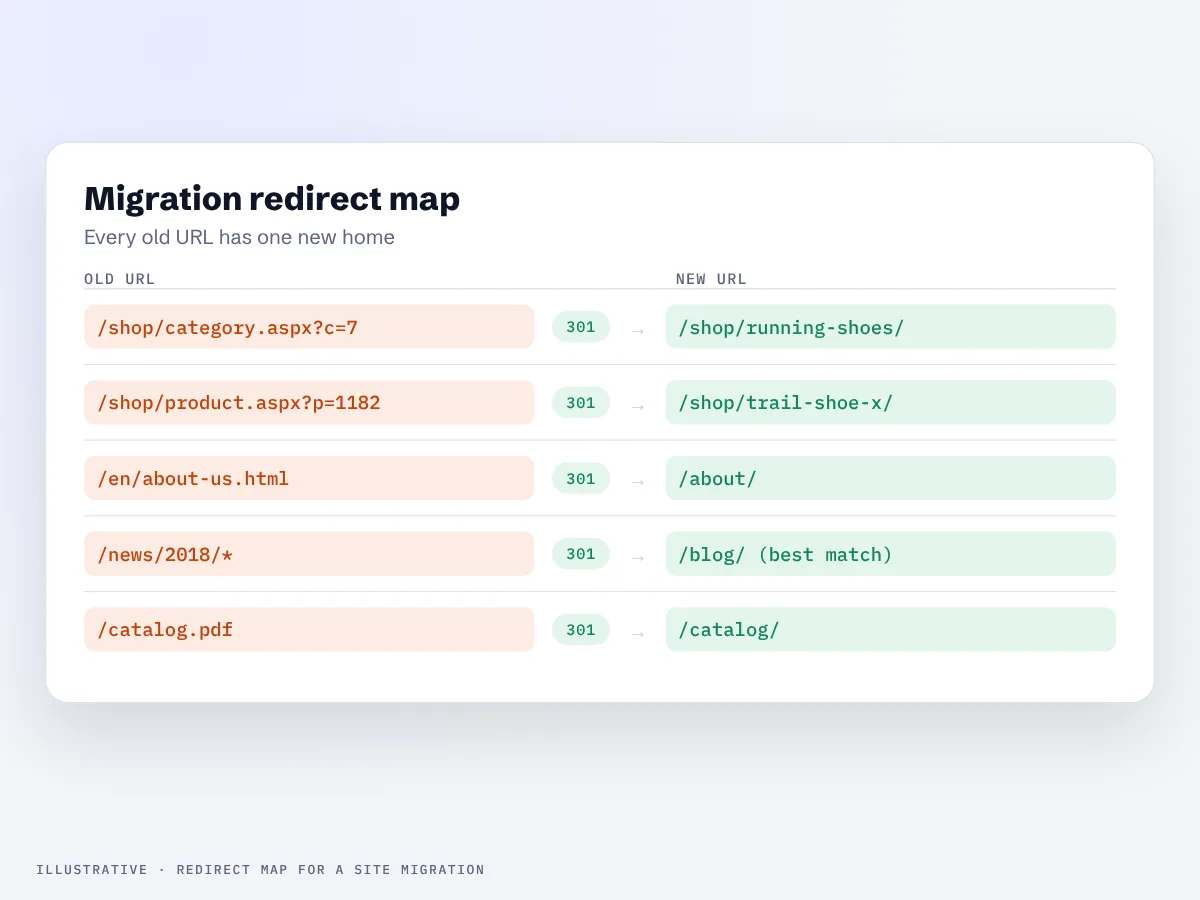
A migration can change thousands of URLs, internal links and technical signals at once. Good migration planning reduces avoidable SEO risk; it cannot promise that nothing changes.
- Website redesigns
- CMS migrations
- E-commerce platform migrations
- Domain changes
- URL restructuring
- Website consolidation
- International expansion
That covers URL mapping, redirects, canonicals, internal links, XML sitemaps and indexation, checked before launch and validated afterwards.
Rendering & performance
Content search engines can actually reach.
Search engines can process JavaScript, but implementation can still affect how content, links and resources are discovered and rendered. Where relevant, we review:
- Client-side rendering
- Server-side rendering
- Rendering behavior
- Content availability
- JavaScript-generated links
- Lazy-loaded content
- Dynamic rendering where relevant
- Hydration issues where relevant
Where relevant, we also identify performance issues affecting page experience and Core Web Vitals (Largest Contentful Paint, Interaction to Next Paint and Cumulative Layout Shift). They matter for users, and they are one part of technical SEO.
Markup, international & e-commerce
Signals that help search engines interpret the site.
Structured data can help search engines understand eligible content and entities, and can support rich results where search features allow. It does not improve rankings on its own or guarantee rich results, and it should only describe what is visible on the page.
- Organization
- Product
- Article
- Breadcrumb
- LocalBusiness where appropriate
- FAQ where appropriate
- Service where appropriate
International sites add hreflang, language and region targeting, URL structures and duplicate regional content to the picture. E-commerce sites bring faceted navigation, filter URLs, product variants, out-of-stock pages and crawl waste, which our E-commerce SEO work covers in depth. Duplicate or near-duplicate URLs can create crawling, indexing and canonicalization problems. That is a technical issue to fix, and it does not mean the site has been penalized.

What changes
What technical SEO changes
Technical SEO creates the conditions for search visibility. It does not control search engine decisions or guarantee the outcome.
Better crawlability
Make important pages easier for search engines to discover and crawl.
Cleaner indexation
Help search engines understand which URLs should be considered for indexing.
Stronger site architecture
Create clearer relationships between important pages, categories and content.
A stronger base for content
Give your content and link-building work a technical setup that supports it.
How it works
How a technical SEO engagement works
Some teams use us as their technical SEO agency from audit to validation. Others want a technical SEO consultant who guides their developers or internal team through the fixes and checks the result.
Understand the Site
Review the platform, website structure, business model, important page types and current SEO objectives.
Crawl & Analyze
Use appropriate crawling, search and analytics data to understand how the site is being discovered and processed.
Find the Constraints
Identify technical issues affecting crawlability, indexation, rendering, architecture and other relevant areas.
Prioritize the Work
Separate high-impact issues from low-priority warnings and identify dependencies.
Fix & Validate
Implement or guide the fixes, then validate that the intended technical behavior is actually happening.
Why GrowthFueling
What we do differently
Proof
Results we can show you
An anonymized case study, with the source data behind it. Alongside it, the measures we report on for this work.
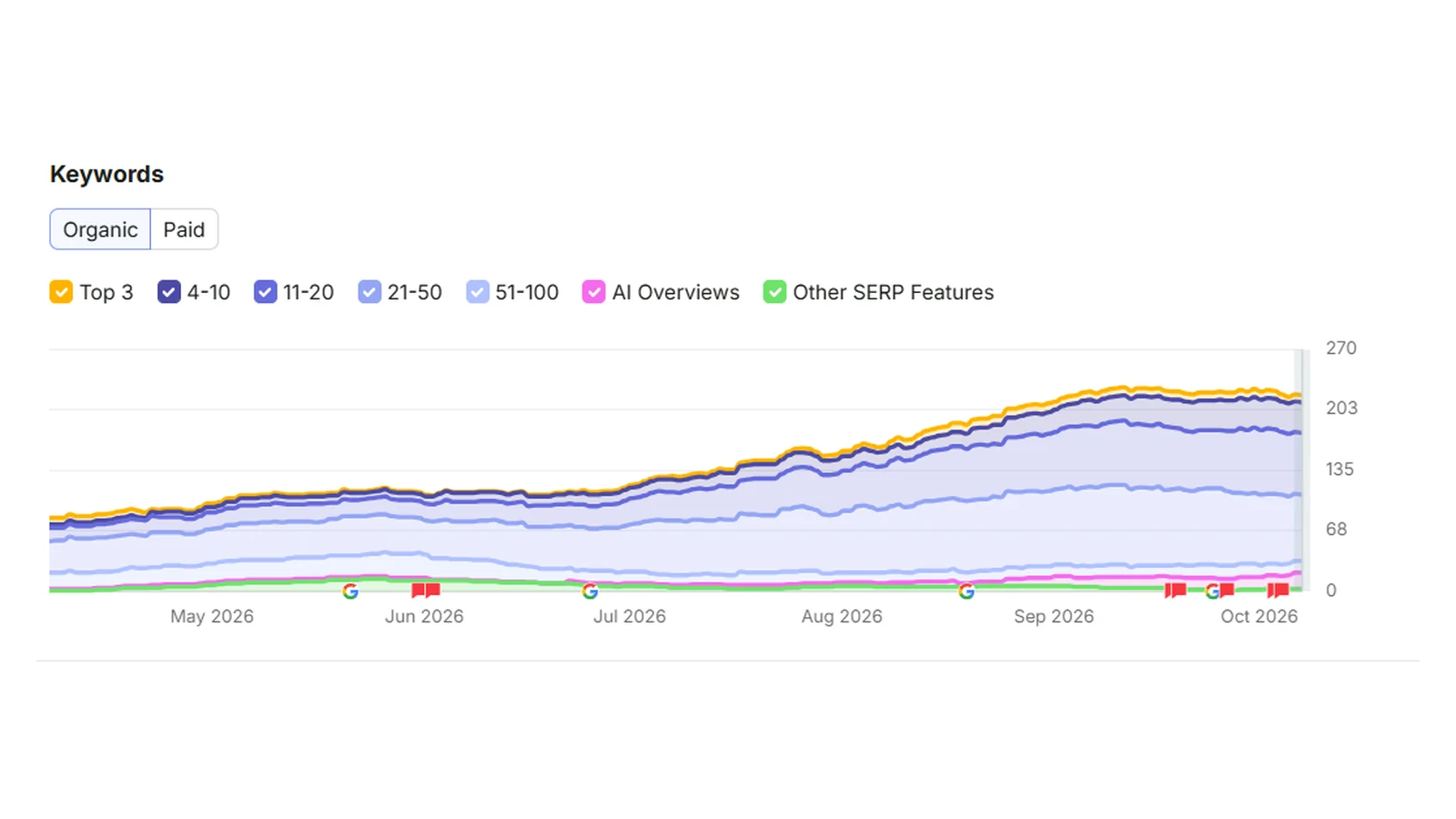
Expanding organic visibility for an outdoor and hobby e-commerce brand
Outdoor & hobby e-commerce brand
What we report on
- Indexation of priority page types
- Crawl activity on important sections, where log data is available
- Status of prioritized fixes
- Core Web Vitals by template, where relevant
- Organic visibility for affected pages
Related
Often paired with Technical SEO
Keep exploring: how we do SEO, how we approach B2B SEO, enterprise SEO and AI SEO and GEO, the article Technical SEO audit: what to prioritize first, or more search insights.
What is technical SEO?
Technical SEO is the work involved in improving the technical foundation of a website so search engines can crawl, render, understand and index its important pages effectively.
What does a technical SEO audit include?
Our technical SEO audit services are scoped to the website and the problem being investigated. An audit can include crawlability, indexation, site architecture, internal linking, redirects, canonicalization, rendering, structured data, Core Web Vitals and other technical areas relevant to search visibility.
Can technical SEO improve rankings?
Technical SEO can remove barriers that prevent search engines from properly accessing or understanding a website. That can support organic search performance, but technical fixes alone do not guarantee higher rankings.
How do I know if my website has technical SEO problems?
Common signs include important pages not being indexed, unexplained organic traffic changes, crawling problems, duplicate URLs, redirect issues, poor internal linking, rendering problems or technical changes that coincide with search performance changes. A proper website SEO audit helps determine whether these issues are actually affecting the site.
Do you work with developers?
Yes. Technical SEO often requires coordination with developers, product teams or platform specialists. We can provide technical recommendations, implementation guidance and validation depending on the engagement.
Can you help with a website migration?
Yes. Site migration SEO is a regular part of technical work. We can review the SEO requirements before and during a migration, including URL mapping, redirects, canonicals, internal links, XML sitemaps, indexation and post-launch validation.
Is technical SEO only about website speed?
No. Performance and page speed optimization are one part of technical SEO. Technical SEO also covers crawlability, indexation, architecture, rendering, URLs, redirects, internal linking, structured data and the rest of the technical setup.
How often should technical SEO be audited?
There is no universal schedule. A site with frequent technical changes, a large architecture or ongoing development may need more regular monitoring. Smaller sites may need a deeper audit after major changes, or when search performance points to a problem.
Can you fix Core Web Vitals and page speed issues?
We identify what is slowing pages down or causing layout shifts, usually at template level, and give developers specific fixes, or implement them where the engagement includes it. Core Web Vitals are one of many signals, so we prioritize them where pages are clearly slow for real users and leave perfect lab scores aside.
Does technical SEO cover mobile SEO?
Yes. Google mainly uses the mobile version of a page for indexing and ranking, so we check that the mobile version carries the same content, links, structured data and metadata as desktop, and that it loads and responds well on phones.
Start here
Request a technical SEO audit
Tell us about your website, platform and current SEO problem. We will use that context to understand where a technical SEO review can help.
Remove the technical barriers to better search visibility.
If important pages are difficult to crawl, understand or index, more content will not necessarily solve the problem. Find the technical issues holding pages back and give your team a clear path to fix them.