
E-commerce Ads
E-commerce PPC Management Built Around Profit.
Our e-commerce PPC management covers Google Shopping, Performance Max and Meta catalog campaigns, and getting products into Shopping results is only the start. We connect product feeds, conversion tracking and product economics to work out which products and campaigns are actually worth scaling.
Free initial review · No obligation · Reply within 1 business day
- Google Shopping & Performance Max
- Product feeds & Merchant Center
- Campaigns measured beyond ROAS
Where budgets go
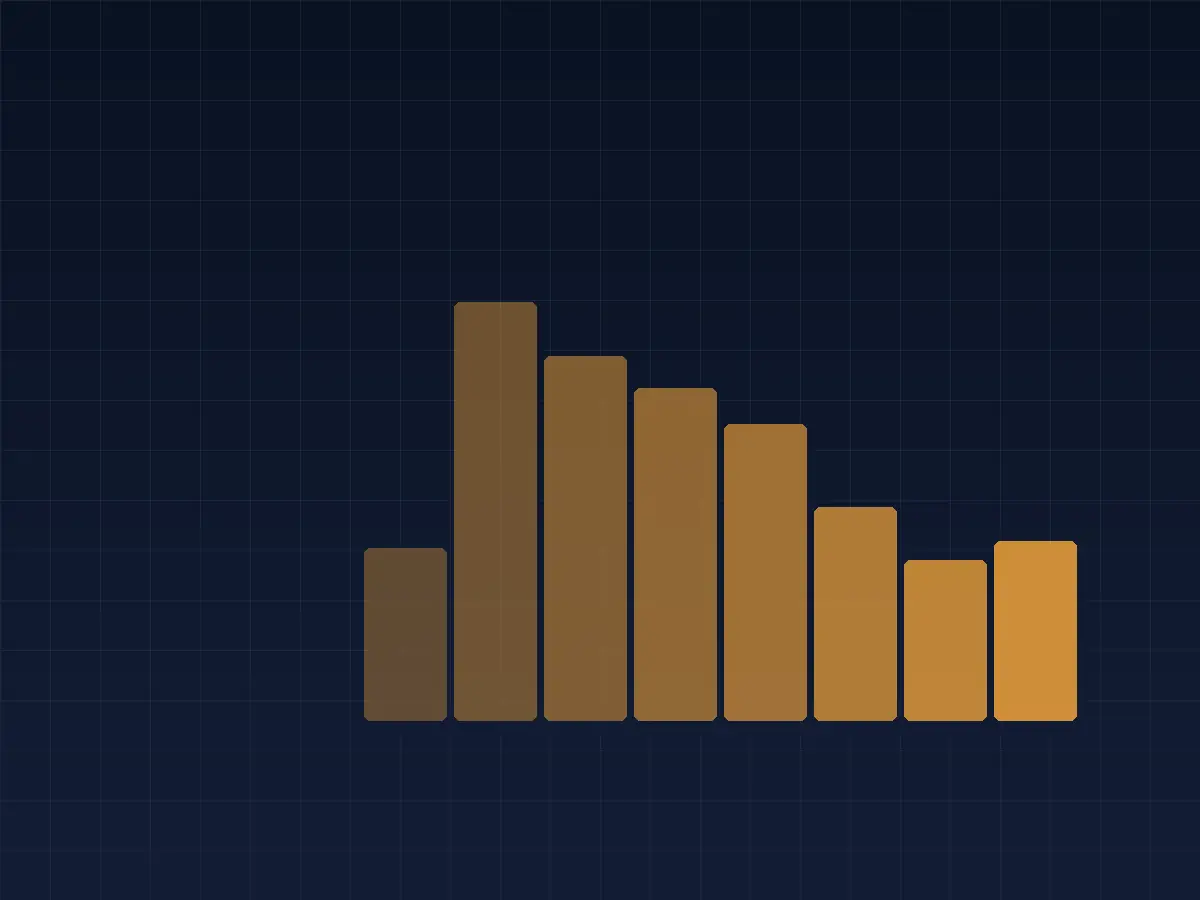
A few products take all the budget. The rest never get a chance.
E-commerce campaigns can quickly concentrate spend around a small group of products. That is not always a problem, but it can hide what is happening across the rest of the catalog.
Big catalog, few winners
A store may have hundreds or thousands of products, but demand is rarely distributed evenly.
Margins are different
Two products can generate the same revenue while contributing very different amounts of profit.
ROAS can mislead
A strong ROAS number does not automatically mean the campaign is profitable.
Demand is uneven
Some products have strong search demand. Others need different positioning, audiences or a different acquisition strategy.
What’s included
E-commerce PPC services
As an ecommerce advertising agency, we manage everything that affects how products get found, clicked and bought. That includes Google Ads for e-commerce, Facebook ads for e-commerce through Meta catalog campaigns, and the product data behind both.
Google Shopping Ads Management
Product-based campaigns designed around search demand, product data and conversion goals.
Merchant Center Management
Keep product data, availability, pricing and required attributes in line with Google’s rules.
Product Feed Optimization
Merchant Center feed optimization: improve product titles, descriptions, attributes and feed structure so the catalog gives advertising platforms better information.
Performance Max Management
Run Google’s automated campaign type when the conversion signals, product data and margins can support it.
Meta Catalog Ads
Use product catalogs for acquisition and remarketing across Facebook and Instagram when the products suit paid social.
E-commerce Conversion Tracking
Track purchases, revenue and relevant e-commerce events so campaign decisions are based on usable data.
Merchant Center full of warnings? Share access and we can look at your feed and account health before our first call.
Get My E-commerce Ads StrategyProduct feeds
Your product feed is your advertising data.
Google and other ad platforms don’t see your catalog the way a customer does. They rely heavily on the product information you send them. Better product data tells them more clearly what you sell, which makes feed quality an advertising job as much as a technical one.
We look at:
- Product titles
- Descriptions
- Product types
- Categories
- Brands
- Attributes
- Availability
- Pricing
- Identifiers
- Images
- Product variants
- Feed errors

Product-level performance
Know which products deserve the budget.
A campaign can look efficient at the account level while a few products consume most of the spend. So we look beyond campaign totals, across products, product groups, categories, brands, margins, average order value, conversion rate, revenue, spend, CPA and ROAS, to understand:
- Which products are attracting demand
- Which products convert
- Which products consume budget without enough return
- Which products have enough margin to justify scaling
- Which products need a different strategy
Not every account needs product-level bid adjustments. Before scaling, we want to know which products can actually support the additional spend.
Profit vs ROAS
A high ROAS can still be a bad result.
ROAS tells you how much revenue was attributed to advertising spend. It does not tell you how much profit remained after the other costs of selling the product. Two products can both produce a 4x ROAS while having very different:
- Product costs
- Shipping costs
- Marketplace fees
- Payment fees
- Discounts
- Returns
- Operational costs
Where the business can provide that data, we factor in the cost behind each sale and stop treating ROAS as the only target. Without it, nobody can calculate true profit, so we work with the margin information that is available. ROAS is useful. It just isn’t the whole P&L.

Purchase tracking
If purchase tracking is wrong, the campaign is learning from the wrong data.
E-commerce campaigns learn from purchase and revenue signals, so those signals need to be right. We review:
- Purchase events
- Transaction value
- E-commerce parameters
- Google Ads conversions
- GA4
- Google Tag Manager
- Meta Pixel
- Conversions API where applicable
- Duplicate purchase events
- Attribution differences
Google Ads, GA4 and Meta will not always report the same numbers. Each counts conversions in its own way, so you can’t simply add them together.

Campaigns & channels
Where e-commerce campaigns are won or lost
Google Shopping starts with the product data.
Unlike Search campaigns, Shopping ads rely heavily on product information to decide where products can appear. So these details end up doing much of the ad’s work:
- Product titles and attributes
- Categories
- Pricing and availability
- Images
- Product identifiers
Turning Shopping on is easy. The work is getting product data and campaign structure to support the demand you want to capture. Broader search advertising sits under Google Ads.
Clean product data before more ad spend.
Increasing the budget does not fix a feed with missing information, incorrect pricing, disapproved products or poor categorization. Depending on the account, Merchant Center work may include:
- Product diagnostics and feed errors
- Policy issues
- Missing attributes and identifiers
- Availability and pricing consistency
- Image requirements
- Product categorization
Some issues depend on Google’s review or on changes only your platform or team can make; we’ll tell you which is which.
Performance Max needs good inputs.
Performance Max uses Google’s automation across eligible inventory to optimize toward the conversion goals you select. For e-commerce, it is only as good as its inputs:
- Product feed quality
- Conversion signals
- Product selection
- Assets
- Audience signals where relevant
- Campaign goals, budget and business economics
It doesn’t replace every other campaign type, and more data doesn’t guarantee better performance.
Use product catalogs beyond search.
Google captures existing search demand. Meta can work differently, using audience signals, creative and product catalogs to introduce or reintroduce products to shoppers. Catalog advertising can support:
- Product discovery and prospecting
- Dynamic product ads
- Remarketing
- Abandoned browsing
- Product-specific audiences
Neither channel is always better; it depends on the product, audience and economics. Detailed Meta strategy lives on our Meta Ads page.
Bring back shoppers who already showed interest.
Not every shopper buys on the first visit. Depending on the business and its privacy and consent setup, remarketing, including dynamic remarketing that shows people the products they viewed, can help reconnect with people who:
- Viewed products
- Added products to cart
- Started checkout
- Previously purchased
Always within platform policies and the consent your customers have given.
The product page still has to do the selling.
Advertising can bring a shopper to the product page. It cannot fix every problem after the click, so we check the product page for:
- Message match and product information
- Clear pricing, shipping and returns
- Trust and reviews where available
- Product images
- Mobile experience and calls to action
- Checkout friction
What changes
Where you should see the difference
These are the areas the work aims to improve. None of them is a guaranteed outcome.
Better product visibility
Help ad platforms understand your priority products and categories.
Cleaner product data
Improve the quality and consistency of the information used in product advertising.
Better budget decisions
Understand where spend is going and which products are producing useful outcomes.
More useful measurement
Connect advertising spend with purchases, revenue and business economics where data is available.
How it works
How we run e-commerce ads
Not every store needs every campaign type. The mix follows the business case.
Understand the catalog
Products, categories, pricing, margins, best sellers and business goals.
Audit product data
Merchant Center, feeds, attributes, identifiers, availability and errors.
Understand demand
Search behavior, product categories, competitors and customer intent.
Build the campaigns
Shopping, Performance Max and/or Meta catalog campaigns based on the business case.
Fix measurement
Purchase tracking, revenue values, e-commerce events and platform conversions.
Evaluate products
Look beyond campaign-level numbers to product and category performance.
Optimize
Budgets, products, search terms, assets, feeds and campaign structure, based on evidence.
Scale selectively
Increase spend where demand, conversion performance and economics support it.
Why GrowthFueling
E-commerce ads judged on more than ROAS.
ROAS optimization has its place, but ROAS leaves out product cost, shipping, fees and returns.
Proof
What good e-commerce ads management should improve
An anonymized case study, with the source data behind it. Alongside it, the measures we report on for this work.

Driving 6.04x purchase ROAS for an agri-inputs e-commerce business
Agri-inputs e-commerce business
What we report on
- Revenue and purchases
- Conversion rate and CPA
- ROAS
- Product-level performance
- Spend distribution
- Average order value
- Contribution margin where available
- Feed health
Related
Often paired with E-commerce Ads
E-commerce paid advertising captures demand now, while E-commerce SEO builds organic visibility that can compound over time. Each one covers ground the other can’t.
Keep exploring: our Paid Advertising services, the article E-commerce SEO vs E-commerce Ads: how to split the effort, case studies or more insights.
What are E-commerce Ads?
E-commerce Ads are paid campaigns that sell products directly, mainly through Google Shopping, Performance Max and Meta catalog ads.
What does E-commerce Ads management include?
Depending on the business, management can include Merchant Center, product feeds, Google Shopping, Performance Max, Meta catalog campaigns, conversion tracking, product-level analysis, budget allocation and ongoing optimization.
Is Google Shopping part of your e-commerce ads service?
Yes. Google Shopping is a core part of our E-commerce Ads service, covering product data, Merchant Center, campaign setup and ongoing optimization.
Do you manage Performance Max for ecommerce?
Yes. Performance Max can be used for e-commerce when the product data, conversion tracking, campaign objective and business economics support it.
Do you manage Meta catalog ads?
Yes. We use Meta catalog ads for e-commerce acquisition and remarketing when the products, audience and margins suit them.
Is a high ROAS always good?
No. ROAS measures revenue relative to advertising spend, but it does not include every cost involved in selling a product. Product cost, shipping, fees, returns and discounts can all affect profitability.
How much should I spend on ecommerce advertising?
There is no universal budget. The right level depends on product demand, CPCs, conversion rate, average order value, margins and the amount of data needed to make useful decisions.
Can you work with our existing ecommerce advertising account?
Yes. We can audit an existing account, identify structural or measurement issues and recommend what should be fixed before additional budget is added.
Can you run Google Shopping ads for a Shopify store?
Yes, and the same goes for WooCommerce or a custom store. Google Shopping depends on the product feed that reaches Merchant Center. On Shopify that feed usually comes from an app or Google’s sales channel, so we check what it actually sends: titles, identifiers, variants, availability and pricing. Some fixes happen in the feed and some need changes in the store itself. Shopify PPC management also means checking that purchase events and revenue values reach Google Ads correctly.
What does Merchant Center feed optimization involve?
It means improving the product data Google uses to decide where your products can appear: titles, descriptions, product types, categories, attributes, identifiers, images and variants. It also covers feed errors, disapprovals and price or availability mismatches. Some issues depend on Google’s review or on changes your platform or team has to make.
Do you run Meta Advantage+ campaigns for e-commerce?
Yes, where the catalog, conversion data and budget can support them. We still check product sets, creative variety and existing-customer settings where available, and we don’t hand everything to automation by default.
Can E-commerce Ads and E-commerce SEO work together?
Yes. Paid and organic search serve different purposes, but search intent, product categories, landing-page performance and demand data can inform both. See E-commerce SEO.
E-commerce Ads
Grow e-commerce sales with better paid acquisition
Tell us about your store, products and current advertising. We’ll look at the catalog, campaign setup, conversion data and where the biggest opportunities are.
Let budget follow profit.
We start by finding out which products people want, which ones convert and what each sale is really worth after costs.