
E-commerce SEO
E-commerce SEO That Gets Your Products and Categories Found
Our e-commerce SEO services help your products and categories get found by customers who search by product, category, problem, brand and use case before they buy. Each strategy covers the technical setup, product and category visibility, site architecture and organic performance for the searches worth the most to your store.
Free initial review · No obligation · Reply within 1 business day
Technical SEO, product visibility and category growth, planned around how shoppers search.
How shoppers search
Most stores optimize content and overlook the pages that drive purchases.
Blog posts are a small part of online store SEO. Your most valuable organic search opportunities often sit on category pages, collection pages, product pages and other commercial landing pages.
A strong strategy connects informational searches with the pages that help customers compare, evaluate and buy.
Product searches
People already know what they want and search for specific products, brands or models.
Category searches
Broader searches help shoppers discover product types, categories and options.
Commercial research
Shoppers compare features, use cases, quality, price and alternatives before buying.
Informational searches
Questions around problems, use cases and product selection can reach shoppers before they have picked a product.
What’s included
E-commerce SEO services
E-commerce websites have SEO problems that do not exist in the same way on smaller service websites, so e-commerce search engine optimization needs its own approach.
Products, categories, variants, filters, sorting pages, inventory changes and large site structures can create both opportunities and technical problems.
Category & Collection SEO
Build category and collection pages around real search demand, useful information and commercial intent.
Product Page SEO
Improve product titles, descriptions, page structure, internal links and supporting information around how shoppers search.
Technical E-commerce SEO
Improve crawlability, indexation, canonicalization, site architecture, pagination and the rest of the technical setup.
Faceted Navigation SEO
Control how filters, sorting and parameter-based URLs are crawled and indexed so they do not create unnecessary complexity.
Internal Linking
Connect categories, products and supporting content so search engines and shoppers can discover important pages more efficiently.
Product Schema & Structured Data
Implement and validate relevant product schema so search engines can better understand price, availability and other product information where appropriate.
Want to know where organic search could do more for your store? We’ll review your categories and technical setup before our first call.
Get My E-commerce SEO StrategyTechnical e-commerce SEO
Give search engines a store structure they can crawl and understand.
Large product catalogs create technical SEO challenges that can quietly limit organic visibility.
We look at how search engines crawl, interpret and reach important pages across the site, then rank fixes by their likely impact on your store. Areas can include:
- Crawlability
- Indexation
- Canonical URLs
- Site architecture
- Internal linking
- XML sitemaps
- Pagination
- Faceted navigation
- URL parameters
- Duplicate product and category pages
- Product variants
- Redirects
- Broken links
- JavaScript rendering
- Mobile experience
- Core Web Vitals where relevant
- Structured data

Faceted navigation
Not every filter deserves its own page.
Filters for size, color, brand, price, material, rating, availability and sorting can generate thousands of URL combinations.
The real question is which filtered URLs have search value of their own, and which only create crawl and indexation complexity. The answer depends on the store, the platform and how customers search, so the treatment can combine:
- Crawl controls
- Canonicalization
- Internal-link management
- Parameter handling
- Selective indexation
- URL architecture
- Platform-specific implementation

Product & category structure
Your products should strengthen your category structure.
Product pages and category pages should not compete with each other.
A clear information architecture helps search engines understand how categories, subcategories, products, related products and supporting content connect. That can help spread internal authority, improve discovery and give shoppers clearer paths through the site.
- Clear category hierarchy
- Relevant internal links
- Descriptive URLs
- Useful category copy
- Product-to-category relationships
- Related product links
- Supporting content
- Fewer unnecessary duplicate pages
Clear product and category information also helps AI-powered search understand what you sell.

What changes
What e-commerce SEO changes
Better product discovery
Important products become easier to find through relevant organic searches.
Stronger category visibility
Category and collection pages can target broader commercial searches.
Cleaner site architecture
Search engines and shoppers get clearer paths through the catalog.
More useful commercial content
Product and category pages answer the questions that influence purchase decisions.
How it works
How we turn e-commerce search into a growth system
As an e-commerce SEO company, we start with the products, categories and search opportunities with the most commercial value, then fix the technical setup and content around them.
Product & Market
Understand the catalog, margins, products, categories, customers and business priorities.
Search Demand
Research how customers search for products, categories, problems and use cases.
Site Architecture
Map categories, products, internal links and important commercial pages.
Technical Fixes
Fix crawlability, indexation, duplication and other technical barriers.
Content & Relevance
Improve category content, product information and supporting content around search intent.
Measure & Iterate
Track organic visibility, qualified traffic, product and category performance and conversions.
Why GrowthFueling
What we do differently
Proof
Results we can show you
An anonymized case study, with the source data behind it. Alongside it, the measures we report on for this work.
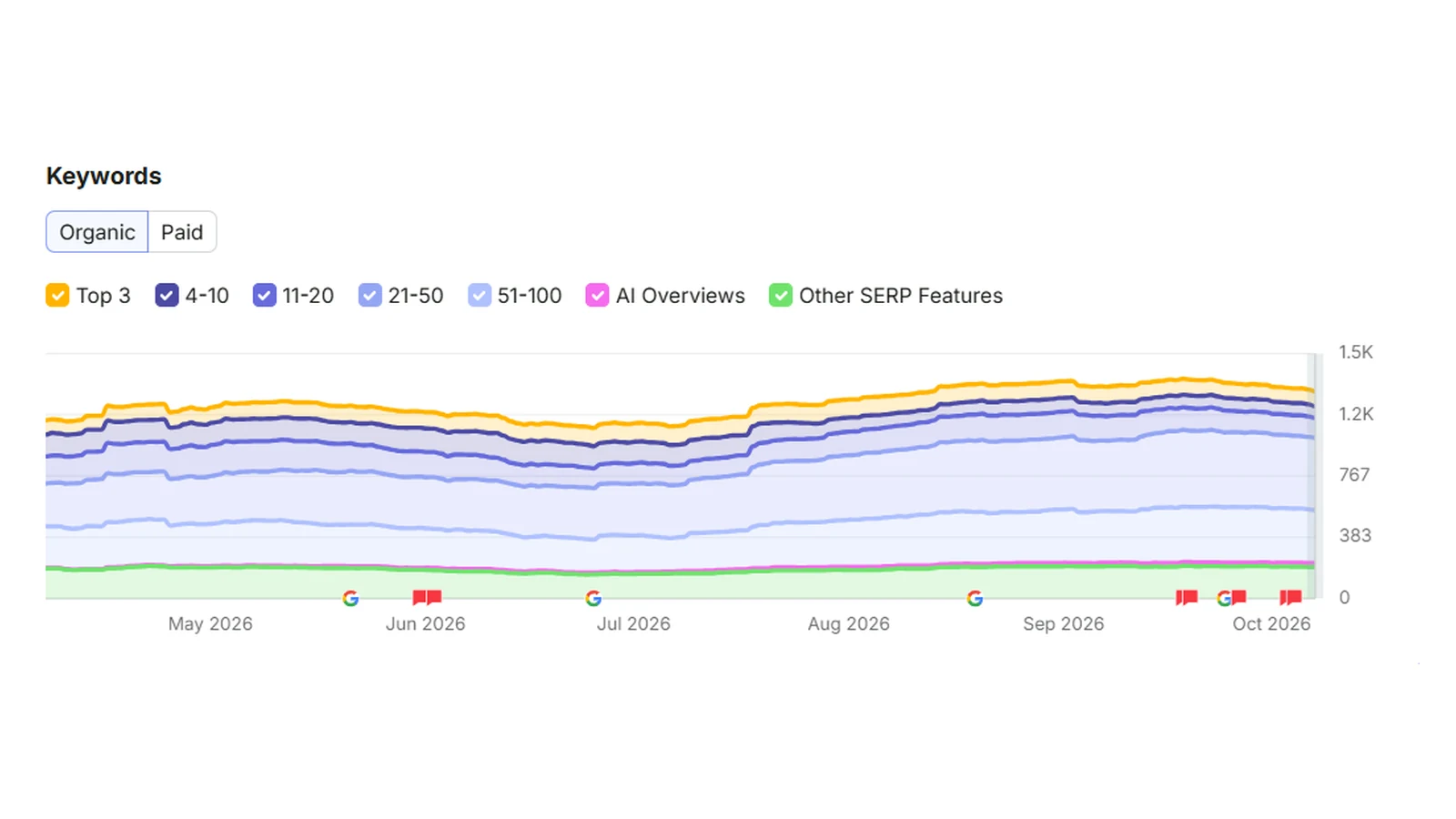
Organic visibility for a home improvement e-commerce business with local service areas
Home improvement e-commerce business
What we report on
- Organic visibility for priority categories and products
- Qualified organic traffic to category and product pages
- Crawl and indexation health across the catalog
- Organic conversions and revenue by category, where tracking allows
- Structured data validity on product pages
Related
Often paired with E-commerce SEO
Many stores use organic and paid search together, but they solve different acquisition problems. Organic search builds visibility for products, categories and the searches shoppers make, and it compounds over time. E-commerce Ads can capture demand immediately through paid placements.
Keep exploring: our SEO services, how we approach B2B SEO, local SEO and enterprise SEO, e-commerce SEO by industry, or the article E-commerce SEO vs E-commerce Ads: how to split the effort.
What is E-commerce SEO?
E-commerce SEO is the process of improving an online store so that its products, categories and supporting content can be discovered through relevant organic searches. It combines technical SEO, site architecture, product and category optimization, internal linking, content and search intent.
What is the difference between product SEO and category SEO?
Product SEO focuses on individual products and the searches people use to find or evaluate them. Category SEO focuses on broader product groups and commercial searches. Both should sit within a clear site architecture, with each page type targeting its own searches.
Do you optimize product pages?
Yes. Product SEO can include product titles, descriptions, page structure, internal links, supporting content, structured data and other elements that help search engines and shoppers understand the product.
Can E-commerce SEO help category pages rank?
Yes. Category and collection pages can target broader commercial searches when they provide useful information, match search intent and sit within a strong technical and internal-linking structure. Rankings are never guaranteed.
How do you handle filters and faceted navigation?
We assess how filters, sorting options and URL parameters affect crawling, indexation and duplicate content. The goal is to make useful pages discoverable while preventing unnecessary URL variations from creating technical SEO problems.
Does product structured data improve rankings?
Structured data helps search engines understand information on a page and can make eligible pages easier to interpret for supported search features. It is not a guarantee of rankings or rich results.
How long does E-commerce SEO take?
The timeline depends on the size and technical condition of the store, competition, search demand, product catalog and amount of work required. Technical improvements can sometimes produce earlier changes, while broader organic growth usually takes longer to compound.
Do you work with Shopify and other e-commerce platforms?
Yes. We offer Shopify SEO services and also work on WooCommerce, Magento, BigCommerce and custom stores. We assess the technical and structural limitations of the platform and identify what can be improved through configuration, development or SEO work.
Is Shopify SEO different from WooCommerce SEO?
The goals are the same, but each platform limits you in different ways. Shopify fixes some URL structures, such as the /products/ and /collections/ paths, and can create duplicate product URLs through collection links, so the work often centers on theme templates, apps and internal linking. WooCommerce runs on WordPress, which gives more control over URLs and markup but leaves more room for plugin conflicts and indexation mistakes. Good ecommerce SEO works within whichever platform you run.
What should happen to out-of-stock product pages?
It depends on whether the product is coming back. Temporarily out-of-stock products usually stay live with clear availability and alternatives, because removing them throws away the page’s visibility. Discontinued products can redirect to the closest replacement or category when there is a true equivalent, or return a 404 or 410 when there isn’t. We set rules your team can apply across the catalog.
Start here
Grow organic search visibility for your store
Tell us about your store, product range, market and current challenges. We will look at the search opportunities and technical issues that could be affecting your organic growth.
Make more of your store discoverable through organic search.
Your products and categories should not depend entirely on paid traffic to be found. Build an e-commerce search strategy around your highest-value pages, products and searches.