The short version
- No one controls AI answers, but you can make your business easy to find, understand and quote.
- Start with the real questions buyers ask, then log where you appear today across ChatGPT, Perplexity, Gemini and AI Overviews.
- Fix crawler access, write answer-first pages and keep business details consistent everywhere.
- Earn real mentions on the sites AI tools already cite, and track the same prompts every month.
To get cited in ChatGPT and Google AI Overviews, make your business easy for those tools to reach and quote, and get mentioned on the sites they already trust. Nobody controls the answers themselves, which shift by prompt, user, location and week, but the eight steps below improve your odds.
Picture a buyer asking ChatGPT which accounting software suits a small agency. The answer names a few businesses and links a few sources. This playbook is the process we follow to put a client in that list, written so a business owner can run it with a spreadsheet and a few hours a month. If you want the concepts first, read what is AEO.
Step 1: Find the questions buyers actually ask AI tools
People type short keywords into Google. They type full questions, often with context, into ChatGPT, Perplexity and Gemini. "Best CRM" becomes "What CRM should a 10-person real estate team use if we already pay for Google Workspace?" Your first job is a list of real questions, written the way customers phrase them.
Good sources, roughly in order of value:
- Sales calls and demo notes. The questions prospects ask before they buy are the same ones they ask an AI assistant. Ask your sales team for the ten they hear most.
- Support tickets and chat logs. These show the "how do I" and "does it work with" questions.
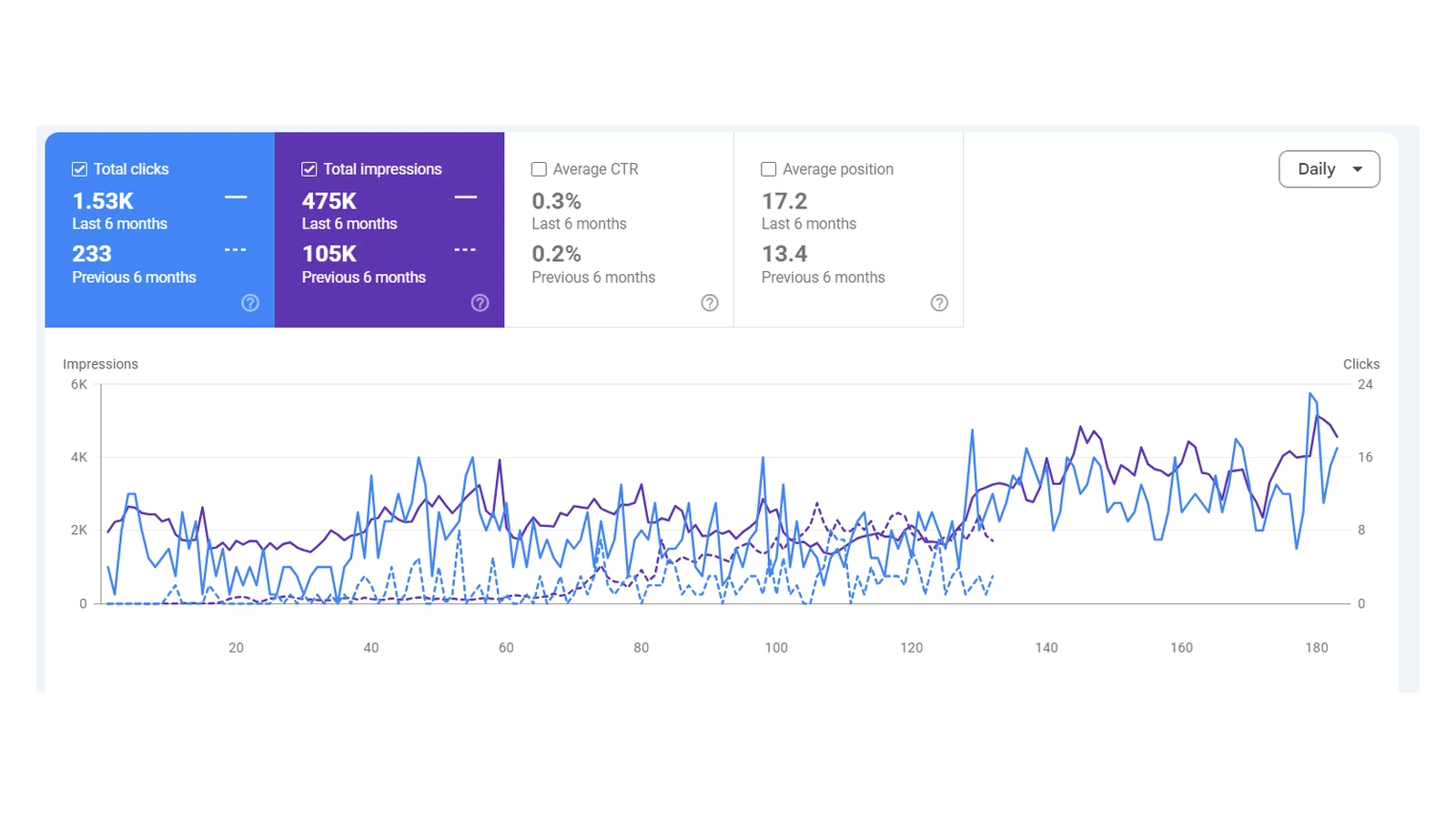
- Google Search Console. Filter the Queries report for longer queries and words like how, which, best, vs and cost. These are close to the conversational prompts people use in AI tools.
- People Also Ask. Search your main topics and note the expanding questions Google shows.
- Reddit and niche forums. Look for threads where people ask for recommendations in your category. Note the exact wording and the details they include (budget, team size, location).
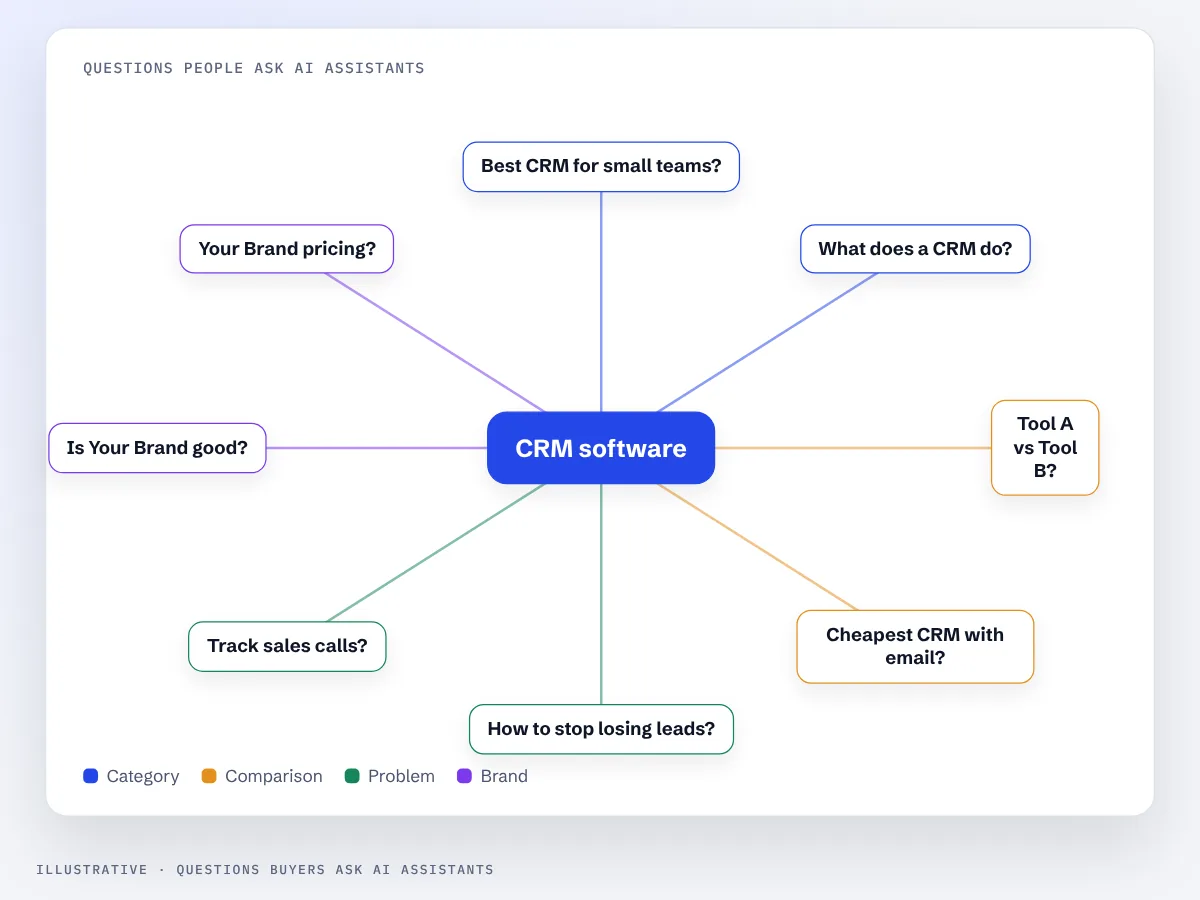
Group the questions into a simple map. For a hypothetical dental clinic, that means category questions ("best dental clinic in Columbus for implants"), comparison questions ("Invisalign vs braces cost"), problem questions ("why does my tooth hurt after a filling") and brand questions ("is [your business] any good"). Pick the 20 to 40 closest to revenue. That list becomes your prompt set for every step that follows.
Step 2: Check where you stand today
Before changing anything, record a baseline. Run each prompt from your list in ChatGPT (with search on), Perplexity, Gemini and Google (to see whether an AI Overview appears). Use a logged-out or fresh session where you can, because personal history and memory change the answers.
For each prompt, log:
- Whether your business is mentioned by name
- Whether your site is linked as a source
- Which competitors are named
- Which URLs are cited (directories, review sites, news, Reddit threads, competitor pages)
- Anything the answer gets wrong about you, such as old pricing or a closed location
The cited URLs column is the most useful one. When we run these checks we usually find the same handful of third-party pages showing up again and again for a category. Those pages are your targets in Step 6.
Expect variation. The same prompt run twice can name different businesses, so look for patterns across many prompts. If you want a quick starting read before building your own sheet, our free AI visibility check runs a set of prompts for your category and shows where you appear.
Step 3: Make sure AI crawlers can reach your site
An assistant cannot cite a page it cannot fetch. This is the step we most often find broken.
Check robots.txt
Different companies use different crawler tokens, and each controls something different. Blocking the wrong one can quietly remove you from an answer engine.
| Token | Who runs it | What it affects |
|---|---|---|
| Googlebot | Google Search, including AI Overviews and AI Mode | |
| Google-Extended | Whether content can be used to train Gemini models (and, per Google, for grounding in Gemini apps). It does not affect Google Search rankings, AI Overviews or AI Mode. | |
| OAI-SearchBot | OpenAI | Whether pages can appear in ChatGPT search results |
| GPTBot | OpenAI | Whether content may be used for training OpenAI models |
| PerplexityBot | Perplexity | Whether pages can be indexed and surfaced in Perplexity answers |
| Bingbot | Microsoft | Bing results, which Copilot draws on |
A common choice is to allow the search crawlers (Googlebot, Bingbot, OAI-SearchBot, PerplexityBot) and make a separate decision about training crawlers. If you want to set this up without hand-editing rules, our AI crawler robots.txt generator builds the file for you. Also check your CDN or firewall settings, since some bot protection blocks these crawlers even when robots.txt allows them.
Check rendering and indexing
If your key content only appears after JavaScript runs, some crawlers will see an empty page. View the raw HTML of your important pages and confirm the main text is there. Then confirm those pages are indexed in Google Search Console and Bing Webmaster Tools. For Google, that check is most of the job. Google states that AI Overviews and AI Mode need no special optimization, and a page only has to be indexed and eligible to show a snippet in regular Search. A technical SEO review covers all of this in one pass.
You may also hear about llms.txt, a proposed file that lists your most useful pages for language models. No major AI provider has confirmed support for it, so keep it at the bottom of the list. If you want one anyway, the llms.txt generator takes a few minutes.
Step 4: Write answer-first pages
AI tools pull short passages that answer a question cleanly. Pages that bury the answer under three paragraphs of introduction are harder to quote. For each priority question from Step 1, make sure one page answers it directly near the top, then adds detail below.
Here is a before and after for a hypothetical B2B app that handles employee scheduling.
Before: "Our innovative platform helps businesses of all sizes streamline their workforce management with powerful, easy-to-use features that save time and money."
After: "Our app is scheduling software for restaurants and retail stores with 10 to 200 hourly staff. It builds weekly schedules from staff availability, flags overtime before it happens and lets employees swap shifts in a mobile app. Plans start at a flat monthly fee per location, and it exports hours to the major payroll and point-of-sale systems."
The second version names the audience, size range, features, pricing model and integrations. Any sentence from it still makes sense when quoted alone. The first says nothing a model can repeat with confidence.
A few habits that help:
- Use the question as a subheading, then answer it in the first one or two sentences below.
- State facts plainly: prices or price ranges, service areas, hours, who it suits and who it does not.
- Add first-hand detail only you have, such as the steps you actually follow or the mistakes you see customers make. This is the experience part of E-E-A-T.
- Keep comparison pages fair. If a competitor is better for a certain buyer, say so. A one-sided comparison reads like an ad, and answer engines have plenty of fairer sources to quote instead.
Step 5: Make business and entity details consistent across the web
AI systems build a picture of your business from many sources. If your website says you serve three cities, your Google Business Profile lists one and an old directory still shows a previous address, the model has conflicting facts. A model that is unsure about your basic details is less likely to recommend you.
Search people call this your entity, meaning the single set of facts about your business that should match everywhere. Check and align these:
- Your website: About page, contact page, footer and service pages
- Google Business Profile: name, categories, address, hours, services and description
- LinkedIn company page: description, size, industry and website link
- Industry directories and review sites: the ones that showed up as cited sources in Step 2 first
- Bing Places and Apple Business Connect, which feed Bing, Copilot and Apple Maps
Write one short description of what you do, for whom and where, and reuse it across profiles with minor edits. The hypothetical dental clinic from Step 1 might use "Family and cosmetic dental clinic in North Columbus offering implants, clear aligners and same-day crowns, open Saturdays." Every word of it can be checked and repeated.
Step 6: Earn mentions on sites AI tools already cite
Your own site is one source. Answer engines also lean on what others say about you. Go back to the cited URLs column from Step 2 and work through the sources that keep appearing.
- Industry lists and roundups. If a "best project management tools for agencies" article keeps getting cited, contact the author with accurate information and a reason you belong. Some will add you; many will not. Pitch only lists where you actually fit.
- Review platforms. Ask real customers to leave reviews on the platforms buyers in your category use, such as Google, G2, Capterra, Trustpilot, Yelp or a niche site. Make it easy with a direct link after a successful project.
- Reddit and communities. Answer questions in your field under a clearly identified account, help without pitching and mention your business only when it fits the question. Communities spot and punish disguised promotion fast.
- Podcasts and expert quotes. Guest appearances and quotes in trade publications create pages that describe what you do in someone else's words.
- Partner and integration pages. If you integrate with or resell another product, ask to be listed on their partner directory with an accurate description.
This is slower than on-site work, and it is where traditional SEO and AI visibility overlap the most, since the same mentions build authority in regular search results. We cover that overlap in more depth in SEO vs GEO.
Step 7: Add structured data where it fits
Schema markup describes your content in a format machines read easily. It will not force a citation, but it removes ambiguity about what a page is and who is behind it.
Useful types for most businesses:
- Organization or LocalBusiness on your homepage or contact page, with name, logo, address, phone and links to your official profiles (sameAs)
- Product or Service on offering pages, with accurate pricing where you publish it
- Article with author and date on blog and guide content
- FAQPage on pages that really contain questions and answers
One caveat on FAQ markup. Since August 2023, Google only shows FAQ rich results for well-known, authoritative government and health websites. For most businesses the markup will not produce the expandable FAQ result in Google. The question-and-answer content on the page is still useful for readers and for answer engines, so keep it. If you add the markup, our FAQ schema generator creates valid JSON-LD from your questions. Only mark up content that is visible on the page.
Step 8: Track and repeat monthly
AI answers shift as models update and as new pages get published. A monthly check of the same prompt set shows whether your work is moving anything. Keep it in one sheet with columns like these:
| Column | What to record | Example |
|---|---|---|
| Date | When you ran the check | Oct 2026 |
| Prompt | The exact wording you used | Best scheduling app for a small restaurant |
| Platform | ChatGPT, Perplexity, Gemini, AI Overview, Copilot | Perplexity |
| Mentioned? | Yes or no, and position in the answer | Yes, third of four |
| Our URL cited? | Which page, if any | /pricing/ |
| Competitors named | Businesses named in the answer | Two competitors |
| Sources cited | Third-party URLs in the answer | A review site and a Reddit thread |
| Errors | Anything wrong about you | Lists old pricing |
| Action | What you will do next | Update pricing page, contact review site |
Also check Google Analytics and your CRM for referral traffic from chatgpt.com, perplexity.ai and similar domains, and ask new leads how they found you. Many AI answers produce no click at all (zero-click search), so "an assistant recommended you" in a sales call counts as a result too.
Each month, pick the two or three prompts with the biggest gap between where you are and where you want to be, and take one action on each.
What not to do
Some tactics get pitched as shortcuts. They tend to backfire.
- Fake or incentivized reviews. They break platform rules, can get profiles penalized and, in many places, break consumer protection law.
- Self-serving "best of" listicles. Publishing "Top 10 agencies" with yourself at number one and thin write-ups of everyone else is easy to spot, and it does little to earn trust from readers or from the third-party sites you want mentions on.
- Keyword stuffing. Repeating "best dentist Columbus" twenty times makes a page worse to read and worse to quote.
- Hidden text aimed at AI. White-on-white instructions or hidden prompts meant for crawlers are a spam tactic. Search engines treat hidden text as a violation, and it puts your whole site at risk.
FAQ
Can I pay to get cited in ChatGPT or AI Overviews?
No. Nobody sells a place in the organic answer or its source list. Ads now appear in or beside some AI answers, and they are labeled as sponsored and kept apart from the cited sources. More on that in our AEO myths section.
How long does it take to show up in AI answers?
It varies. Fixing crawler access or a factual error on a key page can show up within weeks for tools that search the live web. Earning third-party mentions takes months. No one can promise a timeline.
Do I need different content for ChatGPT, Perplexity and Google?
Mostly no. Clear, accurate, crawlable pages and consistent business details help across all of them. The differences are mainly technical (which crawlers you allow) and which third-party sources each tool tends to cite. For Google specifics, see what AI Overviews and AI Mode change for SEO.
Does ranking well in Google help me get cited by AI?
It usually helps. AI Overviews draw on pages Google has indexed, and several answer engines use search results to find sources. Strong regular rankings are a good base, though they do not guarantee a citation.
Should I block AI crawlers to protect my content?
That is a business decision. Blocking search crawlers such as OAI-SearchBot or PerplexityBot keeps you out of those answers. Blocking training crawlers such as GPTBot or Google-Extended is a separate choice, and it does not remove you from ChatGPT search or Google Search.
If you want to see where your business stands before you start, run our free AI visibility check. It shows which prompts mention you, which competitors get named and which sources the AI tools rely on, so you know where to begin. If you would rather have us run the full playbook, see our AI SEO service.