The short version
- Track a fixed set of buyer questions across the main AI tools, measured the same way each month.
- Log five things: mention rate, citation rate, share of voice, position and accuracy.
- GA4 shows some AI referral traffic, but it undercounts. Treat it as a floor.
- Report trends with the sample size, and separate being named from being cited.
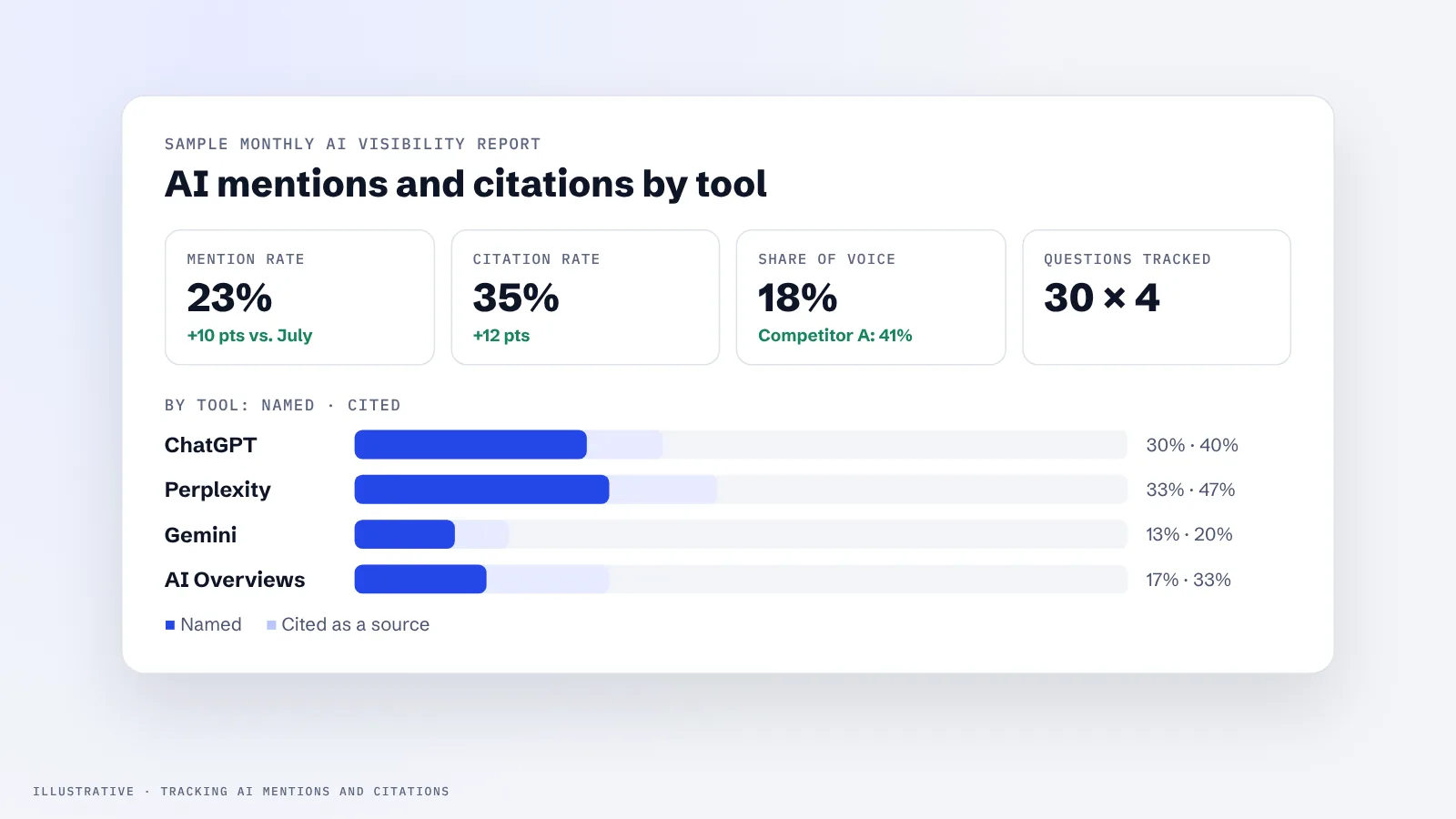
To measure AI search visibility, track a fixed set of buyer questions across ChatGPT, Perplexity, Gemini and Google AI Overviews, and record three things for each answer: whether your business is named, whether your website is cited as a source, and which competitors appear instead.
Repeat the same questions on a set schedule, and pair the results with referral traffic from AI tools in GA4. That gives you a trend you can trust, even though any single answer is unpredictable.
This guide explains the metrics worth tracking, how to set up a simple tracker in a spreadsheet, where analytics helps and where it doesn't, and how to report the results without overstating them. It is the same method we use for the free AI visibility checks we run for businesses.
Why AI visibility is harder to measure than rankings
A Google ranking is fairly stable. If you are third for a keyword today, you will probably be close to third tomorrow, and tools can track it for thousands of keywords. AI answers behave differently:
- They change with wording. "Best CRM for a small team" and "Which CRM should a 10-person sales team use?" can name different businesses.
- They change with context. Location, chat history, signed-in status and personalization all shift the answer.
- They change over time. The same question asked a week apart can return a different list, because the tools update their models and sources.
- There is no official report. OpenAI, Perplexity and Google don't give businesses a dashboard showing how often they are mentioned.
So the goal is a consistent sample measured the same way each time, read as a trend. Treat a single screenshot as an anecdote and twelve months of the same 30 questions as evidence.
The five metrics worth tracking
Keep the list short. These five cover almost every decision you will need to make.
| Metric | What it measures | How to calculate it |
|---|---|---|
| Mention rate | How often the answer names your business | Answers that name you ÷ total answers checked |
| Citation rate | How often your website is used as a source, even when you aren't named | Answers citing a page on your domain ÷ total answers |
| Share of voice | Your mentions compared with competitors for the same questions | Your mentions ÷ all business mentions across the set |
| Position | Where you appear when several businesses are listed | Average place in the list (1 = named first) |
| Accuracy | Whether the AI describes your business correctly | Yes, partly or no, from a "What does [business] do?" prompt |
Two more fields are worth logging even though they aren't scores: the sources cited in each answer (this tells you which sites shape the answers in your market) and notes on anything odd, such as an outdated address or a competitor described with your service.
Mention rate and citation rate tell different stories. Being cited without being named usually means the tools can read your content but trust other businesses more for the recommendation. Being named without being cited usually means the tools know you from other sites, such as reviews or directories. Our article on why AI search engines don't mention your website explains what to do in each case.
Step 1: Build a fixed question set
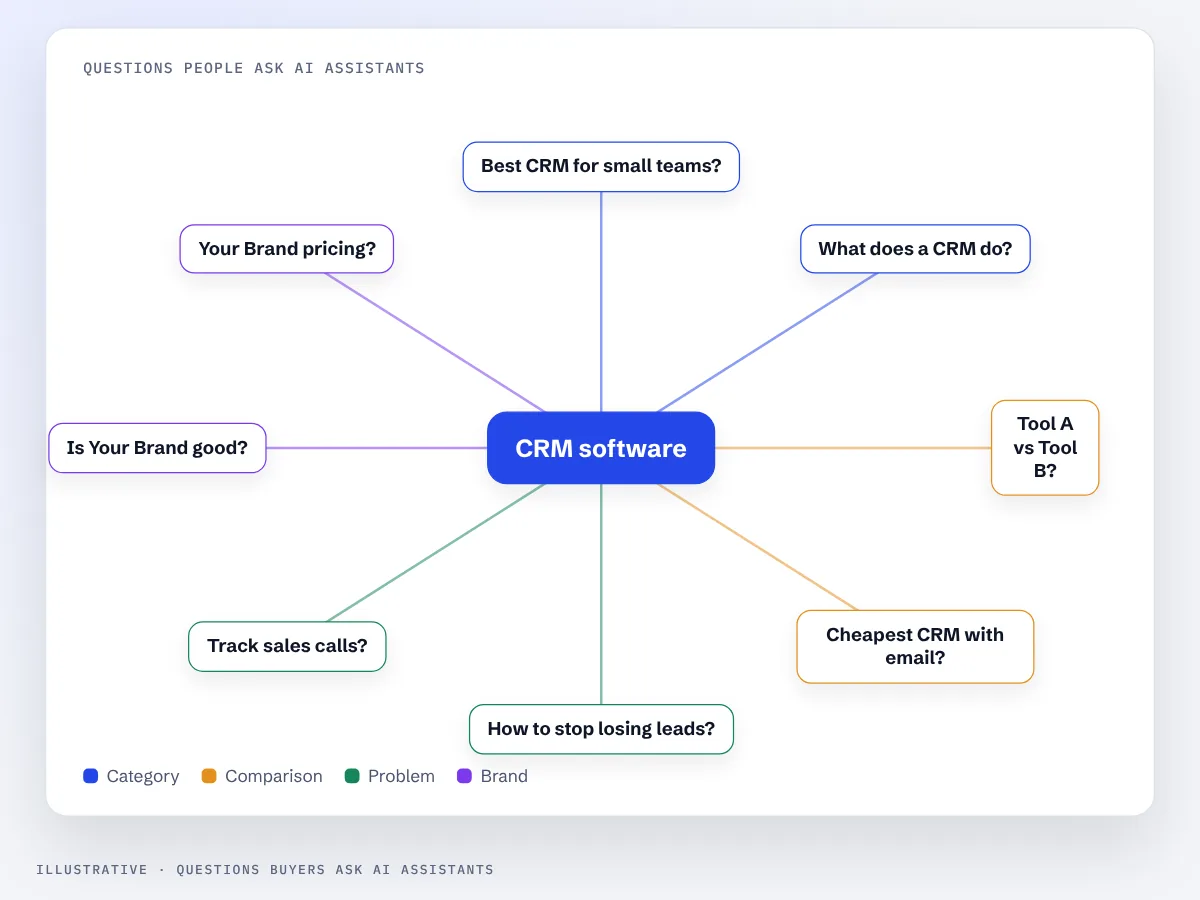
Your measurements are only as good as the questions. Aim for 20 to 40 questions for a small or mid-size business, written the way buyers ask them. Pull them from sales calls, support tickets, long queries in Google Search Console and the "People also ask" boxes for your main topics.
Group them so the results are easier to read:
- Category questions: "best accounting firm for e-commerce businesses in Chicago"
- Comparison questions: "Firm A vs Firm B for small online stores"
- Problem questions: "how to handle sales tax when selling in several states"
- Brand questions: "is [your business] good for small e-commerce brands"
Once the set is fixed, don't keep editing it. Add new questions as a separate group if you need to, so the original trend line stays comparable.
Step 2: Run the checks the same way every time
Consistency matters more than volume. Agree on a method and write it down:
- Tools: ChatGPT (with search), Perplexity, Gemini and Google (look for an AI Overview or try AI Mode). Add Copilot if your buyers use Microsoft products heavily.
- Session: signed out or in a private window, with no previous chat history.
- Location: set to the market you sell in. A VPN or the tool's own location setting works.
- Schedule: monthly is enough for most businesses. Weekly checks mostly measure noise.
- Repeats: for your ten most important questions, ask twice and record both answers. If the results differ, that tells you the answer isn't settled yet, which is useful in itself.
- Evidence: save a screenshot of each answer in a dated folder.
A full run of 30 questions across four tools takes a person a few hours. Paid AI visibility tools from several SEO platforms can automate parts of it, and they are worth a look once you know which questions matter. Start manually either way: reading the answers yourself teaches you more than any score.
Step 3: Set up a simple tracker
A spreadsheet is enough. Use one row per question, per tool, per date. These columns cover what you need:
| Column | Example entry |
|---|---|
| Date | 2026-10-01 |
| Question | Best physical therapist in Denver for lower back pain |
| Question group | Category |
| AI tool | Perplexity |
| Mentioned? | Yes / Cited only / No |
| Position | 2 |
| Competitors named | Competitor A, Competitor C |
| Sources cited | Review site, your blog post, Reddit thread |
| Description accurate? | Partly (old address) |
| Screenshot link | Link to the saved image |
Add a summary tab with a few formulas: mention rate and citation rate per tool, share of voice against your top three competitors, and a count of how often each source domain is cited. Use dropdowns for the "Mentioned?" and "AI tool" columns so everyone records results the same way.
Step 4: Add traffic data from GA4 and Search Console
Mentions are the main signal, but you also want to know whether AI tools send visitors. Analytics can show part of that.
In GA4
- Open the Traffic acquisition report in GA4 and look at session source. AI tools that send clicks usually appear as referrals from domains such as chatgpt.com, perplexity.ai, gemini.google.com and copilot.microsoft.com.
- ChatGPT often adds a UTM parameter (
utm_source=chatgpt.com) to links it shows, which makes those visits easier to spot. - Create a custom channel group or an exploration that groups these sources into one "AI assistants" channel, so you can watch the trend and the conversions it brings.
This undercounts. AI answers are a form of zero-click search: many people read the answer and never click, or open your site later by typing the name. Some apps strip referral data, so visits land in direct traffic. Treat GA4 numbers as a floor.
In Google Search Console
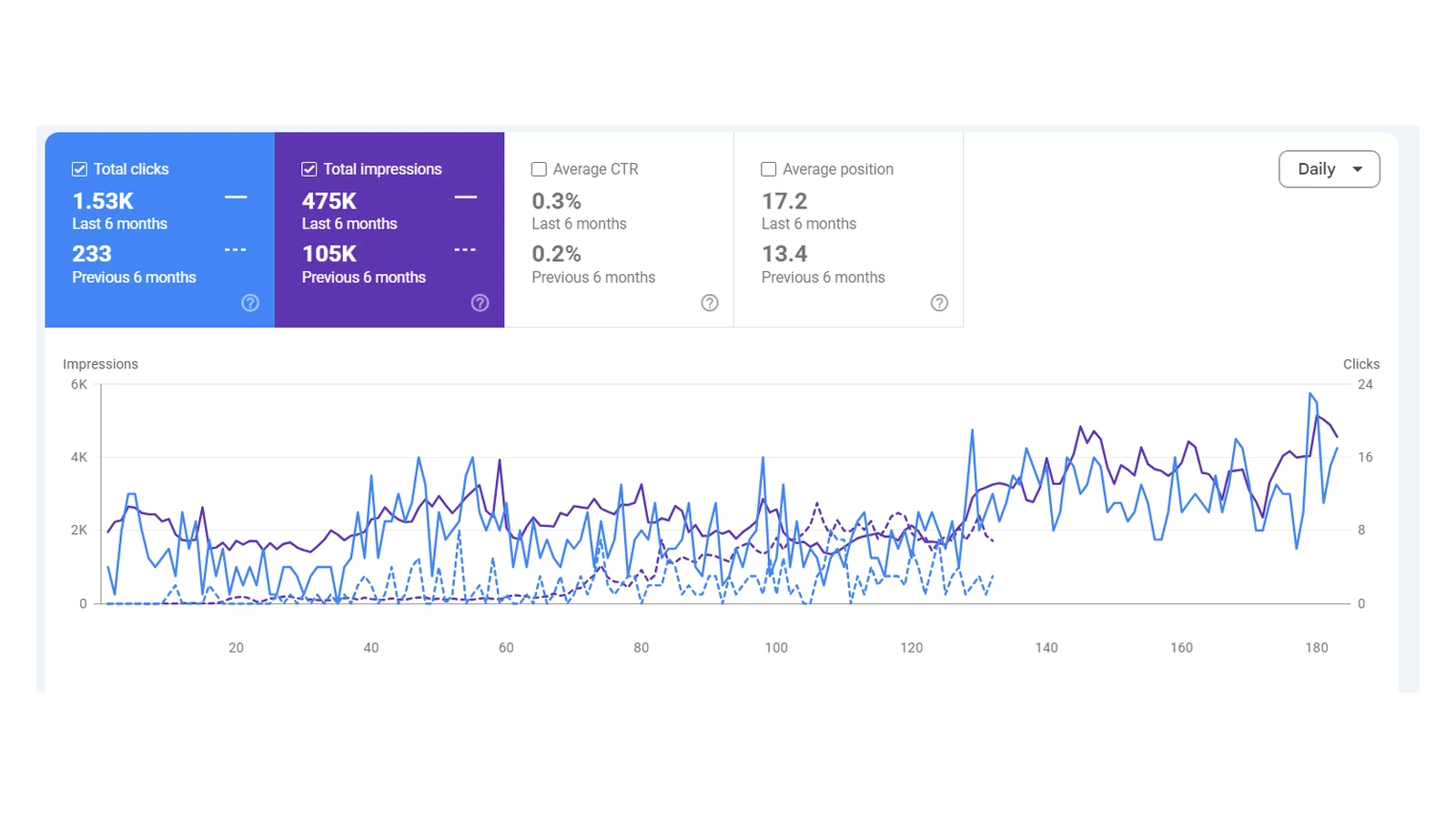
Clicks and impressions from AI Overviews and AI Mode are included in the normal Performance report and, at the time of writing, are not shown separately. You can't isolate them, but you can watch two related signals:
- Branded searches. If more people search your business name over time, some of them may have heard of you through an AI answer.
- Long, question-style queries. Impressions on longer "how", "which" and "best" queries are a reasonable proxy for the conversational searches that trigger AI features.
Our AI Overviews and AI Mode guide covers how these features affect clicks in more detail.
Step 5: Read the results without overstating them
When you report AI visibility to a team or a client, be clear about what the numbers can and can't show.
- Report trends, not single answers. "Mentioned in 8 of 40 answers in October, up from 3 of 40 in July" is useful. "ChatGPT recommended us yesterday" is not.
- Show the sample size. Always include how many questions and tools were checked.
- Separate named from cited. They point to different fixes.
- List the sources. The domains AI answers rely on are often the most useful part of the report, because they show where to earn mentions.
- Connect it to work done. Note what changed on the site or off it during the period, so you can see what moved the numbers.
A simple monthly summary might read: "Across 30 questions and 4 tools, we were named in 9 answers and cited in 14. Competitor A was named in 21. Most answers cite two review sites where we have few reviews, so next month's focus is reviews and the comparison page for question group B."
Turning the numbers into next steps
Measurement is only worth the effort if it changes what you work on. Each pattern in the tracker points to a different job:
| What you see | What it usually means | Where to start |
|---|---|---|
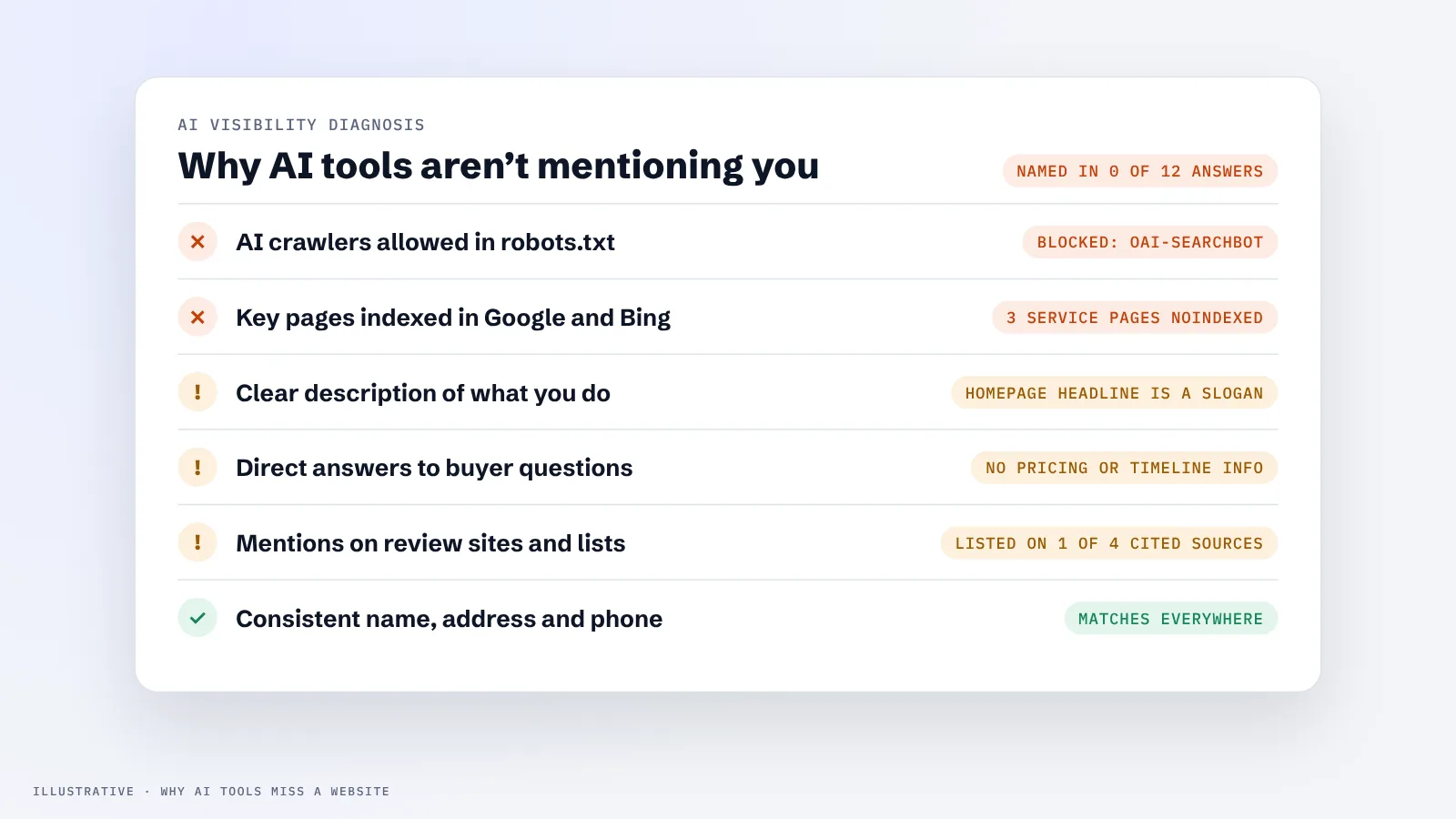
| Not named, not cited, for most questions | Access, indexing or entity problems | Crawler rules, indexing and a clear description of the business |
| Cited, but rarely named | The tools read you but trust others more | Reviews, directories and the third-party sources answers cite |
| Named, but described wrongly | Inconsistent business details across the web | Fix your profile, directories and About page so they match |
| Named for brand questions only | Weak coverage of category and comparison topics | Answer-first service pages and fair comparison content |
| One competitor named everywhere | They own the guide or list the answers rely on | Publish something more useful, or earn a place on that list |
Most of these fixes are ordinary SEO work done with AI answers in mind. If the terms are new, our guide to what AEO is is a good starting point.
Common measurement mistakes
- Testing while signed in. Your own history makes the tools more likely to mention you.
- Changing the questions every month. You lose the trend line.
- Only testing your service name. Buyers ask longer questions with context. Test those.
- Treating GA4 referrals as the full picture. Most AI influence happens without a click.
- Chasing every question. Focus on the 10 to 15 closest to revenue and report on those first.
FAQ
How often should I measure AI search visibility?
Monthly works for most businesses. It is frequent enough to see the effect of your work and slow enough that the answers have time to change.
Is there a tool that shows my mentions in ChatGPT automatically?
Several SEO platforms now sell AI visibility tracking that runs prompts for you. They save time at scale. Each samples answers differently, so compare them to a manual check before relying on one.
What is a good mention rate?
There is no standard benchmark, and it depends heavily on your market and question set. Compare yourself against the competitors named in the same answers, and against your own numbers from previous months.
Can I see AI Overview traffic in Search Console?
Not separately at the time of writing. AI Overview and AI Mode clicks are included in your overall web search numbers. Watch branded searches and long, question-style queries as indirect signals.
Does being cited count if my business isn't named?
Yes, track it. A citation means the tool can read and use your content, which is a step towards being named. It also tells you the gap is trust or positioning, not access.
Want a baseline without building the tracker yourself? Our free AI visibility check runs your customers' questions through ChatGPT, Perplexity, Gemini and Google AI Overviews and shows where you're named, where you're cited and who appears instead. If you want this tracked every month alongside the work to improve it, see our AEO and AI SEO services.