
Real Estate SEO
Real Estate SEO That Brings Buyers to Your Own Website.
Real estate SEO services have to keep up with property buyers, who search before, during and sometimes after they know exactly what they want. They search for locations, property types, projects, developers, neighborhoods, prices and comparisons. We provide SEO for real estate agents, developers and property businesses around those searches, so your own website gets found alongside your portal listings.
Free initial review · No obligation · Reply within 1 business day
- Local search
- Property & project SEO
- Technical SEO
- AI search
Search market
Property searches are more specific than they look
Real estate search covers a lot of ground. The same buyer might search any of these on the way to an inquiry:
- “apartments for sale”
- “2 bedroom apartments in [location]”
- “houses for rent near [location]”
- “new residential projects”
- “office space in [location]”
- “[project name] price”
Intent changes with location, property type and budget, and with whether the person is still researching or ready to inquire.
So each property, project and location page should be built for the search that leads to it.

The challenges
What makes property SEO tricky
Portal competition
Property portals take most high-volume searches. Winning means picking the searches where your own site can be the better answer.
Location complexity
Demand changes by city, neighborhood, suburb and local area, and so does the language people use.
Large listing inventories
Listings create indexation, duplication and thin-content problems, especially when the same property appears in several places.
Inventory that keeps changing
Properties sell, get rented, change price or come off the market. Each change needs a rule for the page.
Project and property architecture
Developers may need separate structures for projects, locations, property types and individual units.
Commercial intent
Not every high-volume property search produces a useful inquiry. Some only produce browsing.
How buyers search
How property buyers search
Each stage needs its own page. Send every search to the homepage and you lose the buyers who were looking for something specific.
- Researchbest areas to live for families
Working out where they want to be.
- Locationproperty in [area]
Narrowing down to a city or neighborhood.
- Property type2 bedroom apartment [area]
Deciding what kind of property fits.
- Project / listingnew apartments in [area]
Looking at specific projects and listings.
- Comparison[project a] vs [project b]
Comparing price, amenities, developer and location.
- Inquirybook a viewing
Ready to contact an agent or developer.
The opportunity
Own your projects and local searches
Many real estate businesses rely almost entirely on channels they don’t control:
- Property portals
- Listing platforms
- Social platforms
- Paid advertising
Those have a place, but you are renting that visibility. Your own website can capture search demand directly and keep it. That doesn’t mean hundreds of near-identical location pages built only to catch keywords. We don’t recommend them.
Site structure
Relationships the site should make clear
Depending on the business, the site may need clear connections between:
- Locations and neighborhoods
- Property types
- Projects
- Individual properties
- Services (buying, renting, selling, leasing)
- Guides and supporting content
Want to know which of your project and location pages can realistically compete? We’ll review them before our call.
Get a Real Estate SEO StrategyStrategy + technical
What the site needs to get right
In real estate search engine optimization, technical SEO and search strategy need to work together. A well-written location page won’t help if expired listings are cluttering the index, and a clean site won’t generate inquiries if the pages don’t match how buyers search.
Search & content
- Property search intent
- Location pages with real substance
- Project pages
- Property type pages
- Useful buying content
- Internal linking
- Commercial landing pages
Technical
- Crawlability
- Indexation decisions for listings
- Canonical URLs
- Duplicate listings
- Expired and sold properties
- URL structure
- Structured data, where it fits
- Site architecture
Content strategy
Content buyers actually need
Real estate content should help people make property decisions. Search volume alone isn’t a reason to write a page. Depending on the business, it can include:
- Neighborhood guides
- Property buying guides
- Area comparisons
- Property type guides
- Financing and buying questions
- Market information where you have first-hand expertise
- Project details, amenities and location information
We don’t mass-produce generic articles. Each piece needs a reason to exist.
Commercial intent
Inquiries your sales team wants
Content should support commercial searches and lead people to the right property, project or service page, with a clear next step. Pages are designed to support:
- Viewing and site-visit requests
- Project and listing inquiries
- Valuation or selling inquiries, where relevant
- Commercial property and leasing inquiries
AI search
Buyers ask AI to compare locations and properties
Buyers now ask AI tools which neighborhoods suit young families, how two projects compare or what to check before a site visit. It doesn’t replace Google, and no one can promise your properties will appear in an AI answer. What helps is information an assistant can quote with confidence:
See AEO & AI SEO- Neighborhood guides written by agents who work the area
- Project pages that state amenities, unit types and handover status plainly
- Clear links between each project, its location and the property types on offer
- The same business name, office addresses and contact details on your site, portals and profiles
- Listing pages that stay crawlable and up to date
Relevant services
How we help real estate businesses
SEO Services
Search visibility across property, project, location and commercial searches.
Explore SEO ServicesLocal SEO
Visibility for location-based searches, Maps and local discovery.
Explore Local SEOTechnical SEO
Fix what stops large or frequently changing property sites from being crawled and understood.
Explore Technical SEOGoogle Ads
High-intent searches and launches, when paid acquisition makes sense alongside organic.
Explore Google AdsKeep exploring: how we run SEO engagements, our full SEO services, other industries or the latest search insights.
Our approach
How we build real estate search growth
Understand the business
Properties, projects, locations, buyers and commercial priorities.
Map search demand
How buyers search across locations, property types and stages of intent.
Build the site structure
Clear relationships between locations, projects, properties and supporting content.
Improve visibility
Technical fixes, content, internal linking and authority.
Measure & iterate
Search visibility, qualified traffic, inquiries and commercial outcomes.
Why GrowthFueling
SEO built around how property buyers search
Case study
A related client result
We haven’t published a real estate case study yet. This related anonymized case shows how we work and how we report results.
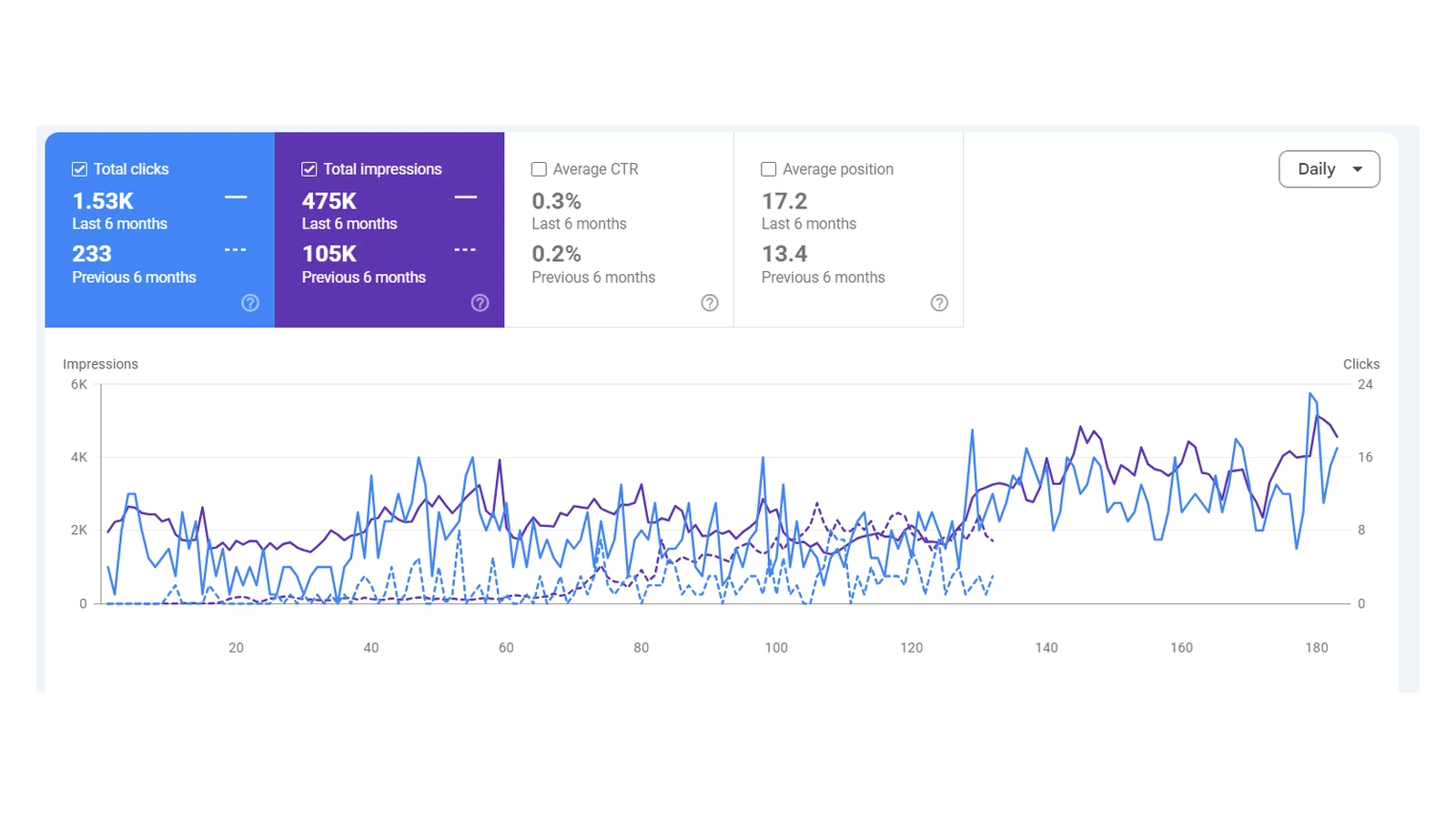
A travel business grows organic clicks by 557%
Travel business
Measures for real estate SEO
- Search visibility for location, project and property searches
- Qualified organic traffic
- Performance of important landing pages
- Inquiries and viewings connected to organic search, where tracked
Related
Often paired with Real Estate SEO
Depending on the business, these can support real estate search growth.
What is real estate SEO?
Improving a real estate business’s website so its locations, projects, properties and services can be found for the searches buyers, renters and investors actually use, and so those visits lead to inquiries.
Is local SEO important for real estate?
Usually, yes. Google Business Profile, Maps and local pack visibility count for agencies and offices. But real estate SEO is broader: property, project and location pages, listing indexation and buyer content all sit outside local SEO.
Should real estate businesses create pages for every location?
No. A location page earns its place when there is real search demand and you have something useful to say: listings, projects, local knowledge. Near-identical pages created only for keywords tend to underperform.
How do you handle listings that are sold or no longer available?
It depends on the page. Some stay live as a reference with similar properties linked, some redirect to the closest relevant page, and some are removed from the index. We set the rules up front so they apply automatically.
Can SEO work alongside property portals?
Yes. Portals will keep many broad searches. SEO focuses on the searches where your own site can be the better answer: your projects, your areas, your expertise, your brand.
Can SEO help real estate developers?
Yes. SEO for property developers often starts with project-name and location searches. Clear project pages, content timed around a new project launch, location content and a structure that survives after sell-out all help.
Do you do SEO for real estate agents and brokerages?
Yes. For agents and brokerages the work usually centers on the areas you cover, your listings and your Google Business Profile, since many property searches are local. Property listing SEO and location page SEO matter most when your site carries its own listings rather than only linking out to portals.
How does SEO support real estate lead generation?
By bringing people searching for your areas, projects and property types to pages with a clear next step: a viewing request, a project inquiry or a valuation. We track those inquiries where possible, so you can see which pages contribute. Lead volume still depends on demand, pricing, stock and how quickly your team follows up.
Real Estate SEO
Get an SEO strategy for your real estate business.
Tell us about your market, properties, projects and current search challenges. As a real estate SEO agency, we’ll look at where organic search can contribute to your growth.
Bring property buyers to your website directly.
Your website should be more than a place to send paid traffic or list properties. It can become a long-term source of qualified search demand.