The short version
- SEO earns rankings and clicks; AEO earns mentions and citations inside generated answers.
- Most of the work is shared: crawlable pages, helpful content and trust signals.
- AEO adds answer-first writing, quotable facts, consistent business details and third-party mentions.
- Count outcomes once by channel and report AEO as visibility to avoid double counting.
SEO wins your pages rankings and clicks, while AEO wins your business a place inside AI-written answers. Most businesses need both, so the useful question is how to divide the work, the budget and the reporting between them.
This guide is for owners and marketing managers deciding where the next hour and dollar should go. It covers what differs, how one page can serve both, how to split effort by business type and how to report without counting a win twice.
New to the term? Start with what is AEO. If you have read our SEO vs GEO comparison, this piece takes a different angle and focuses on ownership, spend and measurement.
AEO and SEO in one line each
SEO (search engine optimization) is the work of getting your pages crawled, indexed and ranked so qualified people click through to your site.
AEO (answer engine optimization) is the work of getting your business and your content used, mentioned or cited when a system writes an answer instead of showing a list of links. That covers Google features such as AI Overviews and AI Mode, and answer engines such as ChatGPT search, Perplexity, Gemini and Copilot.
You will also see AEO called GEO, AI SEO or LLM SEO. The labels overlap heavily. The useful distinction is the outcome you are chasing, which is either a click from a ranking or a mention inside an answer, and often both.
The difference between AEO and SEO, side by side
Here is the comparison we use when planning work with clients.
| Dimension | SEO | AEO |
|---|---|---|
| Goal | Rank for searches that bring qualified visits | Get named, quoted or cited when an answer is generated |
| Where results appear | Classic Google and Bing results, local pack, featured snippets | AI Overviews, AI Mode, ChatGPT search, Perplexity, Gemini, Copilot |
| What the searcher sees | A title and description they choose to click | A written answer, sometimes with a link or source card, sometimes with just your name |
| What wins | Relevance, crawlable pages, links and a page that satisfies intent better than competitors | Clear, specific, verifiable statements from a source the system already trusts, plus consistent facts about your business across the web |
| Typical tactics | Keyword research, technical fixes, internal linking, content upgrades, link earning, local listings | Answer-first writing, fact-dense sections, FAQ content, entity consistency, structured data, third-party mentions, AI crawler access |
| How you measure | Rankings, impressions, clicks, organic leads and revenue in Search Console and analytics | Prompt tracking (does your brand appear for a set list of questions), citation counts, referral visits from AI tools, branded search trends |
| Timeline | Usually months for competitive terms; quick wins from technical fixes | Can move faster on pages that already rank, slower for brands with little footprint; results also shift as models and features change |
| Who should own it | SEO lead or agency, with developer support | The same owner, working with content and PR or whoever manages listings and reviews |
The last row is the one we push hardest on. Splitting AEO and SEO between two owners usually means two people editing the same pages with different goals.
What is shared (most of it) and what AEO adds
For Google's AI features, the entry requirements are the regular Search ones. Google says a page needs to be indexed and eligible to show a snippet, with no AI-specific optimization on top. Other answer engines run their own crawlers and retrieval, yet they reward broadly the same qualities, so the bulk of the work is shared.
Shared work
- Crawling and indexing. If a page is blocked, slow to render or not indexed, it cannot rank and it cannot be cited. Our technical SEO work comes first for this reason.
- Helpful, specific content. Pages written for people, by someone who knows the subject, with real detail.
- Trust signals. Named authors, reviews, credentials and the other signals grouped under E-E-A-T.
- Internal links and site structure. They help crawlers and help retrieval systems find the right page for a question.
What AEO adds on top
- Answer-first sections. The direct answer goes in the first sentence or two under a heading, so it can be lifted cleanly.
- Quotable facts. Prices or price ranges, service areas, hours, turnaround times, specs. Vague copy gives an answer engine nothing to repeat.
- Entity consistency. Your business name, address, phone, categories and description match across your site, Google Business Profile, directories and social profiles. Answer engines build a picture of your business as an entity, and conflicting details weaken it.
- Mentions elsewhere. Answer engines often cite reviews, comparison articles and forums. Being discussed on other trusted sites matters more here than it does for a single ranking.
- AI crawler access. Deciding which bots can read your site. Search crawlers and training crawlers use separate robots.txt tokens, so you can allow one and block the other. Step 3 of our citation playbook explains each token, and our AI crawler robots.txt generator helps you set them without blocking the wrong thing.
No secret file or markup belongs on that list. llms.txt is a proposed convention, and no major AI provider has confirmed it uses the file. Publishing one costs little, so treat it as optional.
How one page can serve both: a worked example
Take a hypothetical plumbing company and its service page targeting "emergency plumber in Austin." Here is how the page changes when you write it for both rankings and answers.
The SEO version
A typical well-optimized service page has the keyword in the title tag and H1, a few paragraphs about the service, a list of common problems handled, a service area section, reviews, a phone number in the header and internal links to related services. It is indexed, loads quickly and has a few local links. This page can rank well.
The weak spot is the opening. It often reads something like "When disaster strikes, you need a plumber you can trust." That sentence ranks fine but answers nothing, so an answer engine has no reason to pull from it.
The AEO additions
- Answer-first intro. Replace the opener with the answer a searcher wants: "We offer 24/7 emergency plumbing across Austin, Round Rock and Pflugerville, with a typical arrival window of 60 to 90 minutes and a flat after-hours call-out fee quoted before we dispatch." (Use only facts that are true for the business.)
- Specific facts in scannable form. A short list of what counts as an emergency (burst pipe, sewer backup, no hot water in winter, gas smell), what the call-out fee covers, payment options and licensing details with the license number.
- An FAQ section. Five or six questions pulled from real calls: "Do you charge more on weekends?", "Can you shut off my water remotely?", "Will insurance cover a burst pipe?" Keep each answer to two or three sentences. Since August 2023, Google has limited FAQ rich results to authoritative government and health sites, so a plumber will not get extra snippet space from this. The section still helps callers and gives answer engines clean question-and-answer pairs.
- Consistent business details. The name, address, phone and hours on the page match the Google Business Profile and the main directories exactly.
- Schema. Add LocalBusiness (or Plumber) markup with the real address, hours and area served, and FAQPage markup for the FAQ block if you want it. Our FAQ schema generator builds the JSON-LD for you. Schema helps machines read the page but cannot force inclusion in any answer.
None of these changes hurt the SEO version. The answer-first intro tends to help human visitors as well, because they get what they came for in the first line.
The same idea on a SaaS comparison page
For a B2B SaaS tool with a "Tool A vs Tool B" page, the SEO version targets the comparison keyword and covers features. The AEO additions are a two-sentence verdict at the top saying who each tool suits, a feature table with plain yes or no values, pricing tiers with dates noted, and a fair section on where the competitor is stronger. Answer engines are more likely to repeat a comparison that reads as fair.
Do I need AEO or SEO? How to split effort by business type
For most businesses the answer is both, weighted differently. The split depends on how mature the site is and how your buyers research. Treat these as starting points.
| Situation | Rough effort split | Where to start |
|---|---|---|
| New site, little traffic | Mostly SEO | Indexing, site structure, core service pages, Google Business Profile, a few early links. Write pages answer-first from day one so you do not have to rewrite later. |
| Established site with traffic | SEO maintained, AEO added on top | Find pages that already rank on page one for question-style searches and upgrade them with answer-first intros, facts and FAQs. These are the fastest AEO wins. |
| B2B with a long sales cycle | Closer to even | Buyers ask assistants for shortlists and comparisons. Invest in comparison pages, clear positioning, case studies and mentions on third-party review and industry sites. |
| Local business | Mostly SEO, with local AEO | Google Business Profile, reviews, consistent name, address and phone details and service pages. Local answers lean heavily on listings and reviews, so that work covers both. |
| E-commerce | Mostly SEO | Category pages, product feeds, technical health and product detail. Add buying guides and specific product facts (sizes, materials, compatibility) that assistants can repeat. |
When we run visibility checks for established sites, we usually find that the brand is missing from answers for reasons SEO would also flag: thin service pages, inconsistent listings or no coverage of common questions. Fixing those helps both channels at once.
A budget rule of thumb: do not open a separate AEO budget line until crawling, indexing and your core pages are in good shape. Before that point, AEO spend mostly pays for work that rests on a broken base.
How to report on AEO and SEO together without double counting
The fastest way to lose trust in a marketing report is to claim the same lead twice, and AEO and SEO overlap heavily.
Keep one source of truth for outcomes
Leads, sales and revenue should be counted once, by channel, in your analytics or CRM. Organic search, AI referrals and direct traffic each get their own row. AEO reporting then explains part of that story without adding a second set of conversions.
Report AEO as visibility, with clear labels
- Prompt tracking. A fixed list of questions your buyers ask, checked on a schedule across the main answer engines. Record whether you are mentioned, cited with a link, or absent.
- AI referral traffic. Visits from ChatGPT, Perplexity, Gemini and Copilot show up as referrals in analytics. Create a channel group for them so they do not hide inside "referral."
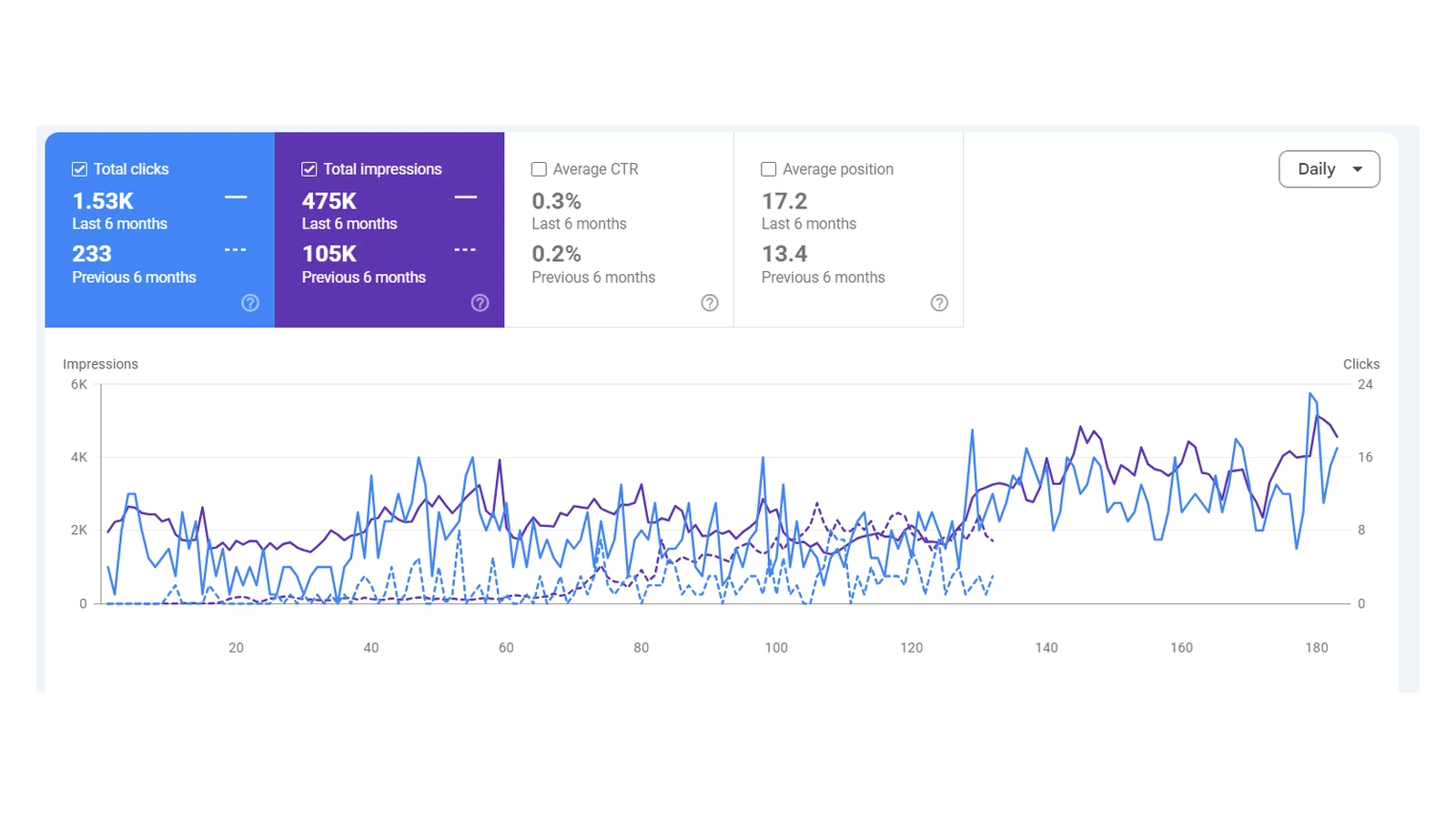
- AI Overviews. Google does not report AI Overview impressions separately in Search Console; they are folded into normal Search performance data. Treat any third-party AI Overview tracking as an estimate.
- Branded search. If people see your name in answers, some will search for you later. A rising branded search trend is a useful supporting signal, though it has other causes too.
A simple reporting layout
- Business outcomes (leads, revenue) by channel, counted once.
- SEO health: indexed pages, rankings for priority terms, clicks and impressions.
- AEO visibility: prompt tracking results, AI referral sessions, notable citations.
- Notes connecting the two, such as "the emergency plumbing page was rewritten in March; clicks and AI mentions both rose afterward."
Expect more zero-click searches where someone gets an answer and never visits. Say so plainly in reports. For more on how Google's own AI features affect click data, see our piece on what AI Overviews and AI Mode change for SEO.
Signs you are overdoing AEO at the expense of SEO
New topics attract budget, sometimes at the cost of the basics. We look for these warning signs when reviewing a program.
- Technical issues are piling up. Pages are slipping out of the index or crawl errors are growing while the team works on prompt tracking.
- Every page has an FAQ bolted on. FAQs copied across dozens of pages with the same questions add bulk and little value.
- Content is written for machines. Pages read like lists of definitions with no voice, no examples and nothing a person would want to read to the end.
- Organic leads are falling and nobody is looking. If the report leads with "mentions in ChatGPT" while organic leads drop, priorities have drifted.
- Money is going to unproven files and tricks. Paying for llms.txt setups, "AI schema packages" or prompt-stuffed copy before the core site is sound.
The usual fix is to rebalance. Put the technical base back in order, then keep the AEO work that improves pages for readers.
FAQ
Is AEO replacing SEO?
No. Answer engines still depend on pages that are crawlable, indexed and trusted, which is SEO work. AEO adds a layer on top of that base.
Can I do AEO and SEO together on the same pages?
Yes, and that is the most efficient approach. Answer-first intros, specific facts, FAQs and accurate schema help a page rank and get cited at the same time.
Do I need special markup or an llms.txt file to appear in AI answers?
No. Google treats eligibility for AI Overviews and AI Mode the same as for regular Search results. llms.txt is a proposal without confirmed support from major providers. If you want one anyway, our llms.txt generator makes it quick.
How long does SEO for AI search take to show results?
A page that already ranks may start showing up in answers within weeks of an upgrade. Newer sites need the usual SEO time first. Nobody can guarantee inclusion in any answer engine.
Should AEO and SEO be handled by different people?
We recommend one owner for both, with help from content and whoever manages listings, reviews and PR. Two separate owners tend to pull the same pages in different directions.
Want to see where your business stands today? Run our free AI visibility check to find out whether answer engines mention you for the questions your buyers ask, and which SEO gaps are holding you back. If you would rather talk it through, our AEO and AI SEO team can help you plan the split.