The short version
- Product feed quality improves Shopping ads and organic product visibility at once.
- Use ads for new products, promotions, testing and marketplace-heavy head terms.
- Use SEO for steady-demand categories, attribute searches and brand queries.
- Decide the split by category using contribution margin. ROAS alone misleads.
For an online store, paid and organic search overlap more than in almost any other sector. Shopping ads, free product listings, organic category pages, product pages and AI shopping answers can all appear for the same query on the same screen. So the useful question is how to split effort by category, product and margin.
This is the framework we use when a store asks us where the next dollar or the next hour should go.
How each channel works
E-commerce ads (Google Shopping, Performance Max and Meta catalog campaigns) use your product feed to match products to searches and audiences. You pay per click, results start within days, and spend can scale up or down at will. When spend stops, the traffic stops.
E-commerce SEO ranks category pages, product pages and supporting content based on relevance, technical health and authority. It takes months to build and is paid for in staff time and development work. It keeps earning after the work is done, though rankings always need maintaining.
| Factor | E-commerce ads | E-commerce SEO |
|---|---|---|
| Speed to traffic | Days | Usually months |
| Main ranking input | Product feed, bids, budget | Page relevance, site health, links |
| Pages that rank | Individual products | Mostly categories, then products and guides |
| Cost model | Per click, ongoing | Upfront work, ongoing upkeep |
| Control | High: switch on, off, reallocate | Lower: Google decides what ranks |
| Best at | New products, promotions, testing | Steady demand, attribute searches, brand |
Product data feeds both channels
Product titles, attributes, availability, prices, images and reviews feed both channels. A well-maintained feed improves Shopping performance and free listings. Consistent on-page data (matching prices, clear availability, product structured data) improves organic eligibility for rich results. Fixing product data is often the best-value work a store can do, because one fix pays in two places.
What to check first:
- Titles. Lead with the words shoppers use: brand, product type, then the attributes that separate it (size, material, color, pack quantity). “Trail Runner X” tells a shopper nothing. “Trail Runner X Men’s Waterproof Hiking Shoe, Size 10” does.
- Attributes. Fill in every relevant field your feed supports. Missing GTINs, colors or sizes limit which searches a product can match.
- Price and stock consistency. The feed, the product page and the structured data should agree. Mismatches cause disapprovals in Merchant Center and confuse organic results.
- Reviews. Product reviews help click-through in both paid and organic listings. If you don’t collect them systematically, start there.
Where ads should lead
- New products with no reviews, links or ranking history. Ads give them visibility while organic signals build.
- Seasonal promotions and short-lived ranges. A page that exists for six weeks will rarely rank in time.
- Generic head terms dominated by marketplaces. If the top organic results are big marketplaces and national retailers, paid placement may be the only realistic way onto page one for now.
- Remarketing. Bringing back people who viewed products or abandoned a cart is a paid job by nature.
- Testing demand. Before you invest in a new category page, a few weeks of Shopping data will show whether people search for it and convert.
Our e-commerce ads work usually runs a full funnel. One food e-commerce account we manage combines Demand Gen, Search, Shopping, Performance Max, brand and remarketing campaigns. From Q1 2020 to Q3 2026 it recorded 18.4K purchases at 410.49% Actual ROAS (about 4.10x) on ₹49.1L spend, with a ₹3.62 average CPC (see the case study). That kind of return depends on product margins that can carry the cost of every click.
Where SEO should lead
- Core categories with steady, year-round demand. These are the pages that compound. Every month they rank is a month you don’t pay for those clicks.
- Attribute-rich searches such as material, size, use case or compatibility. These long-tail queries are numerous and often cheaper to win organically than to buy one by one.
- Buying guides and comparisons that shape a decision before the shopper is ready to buy.
- Brand and product-name searches. You should own these organically. Whether to also bid on them is a separate test.
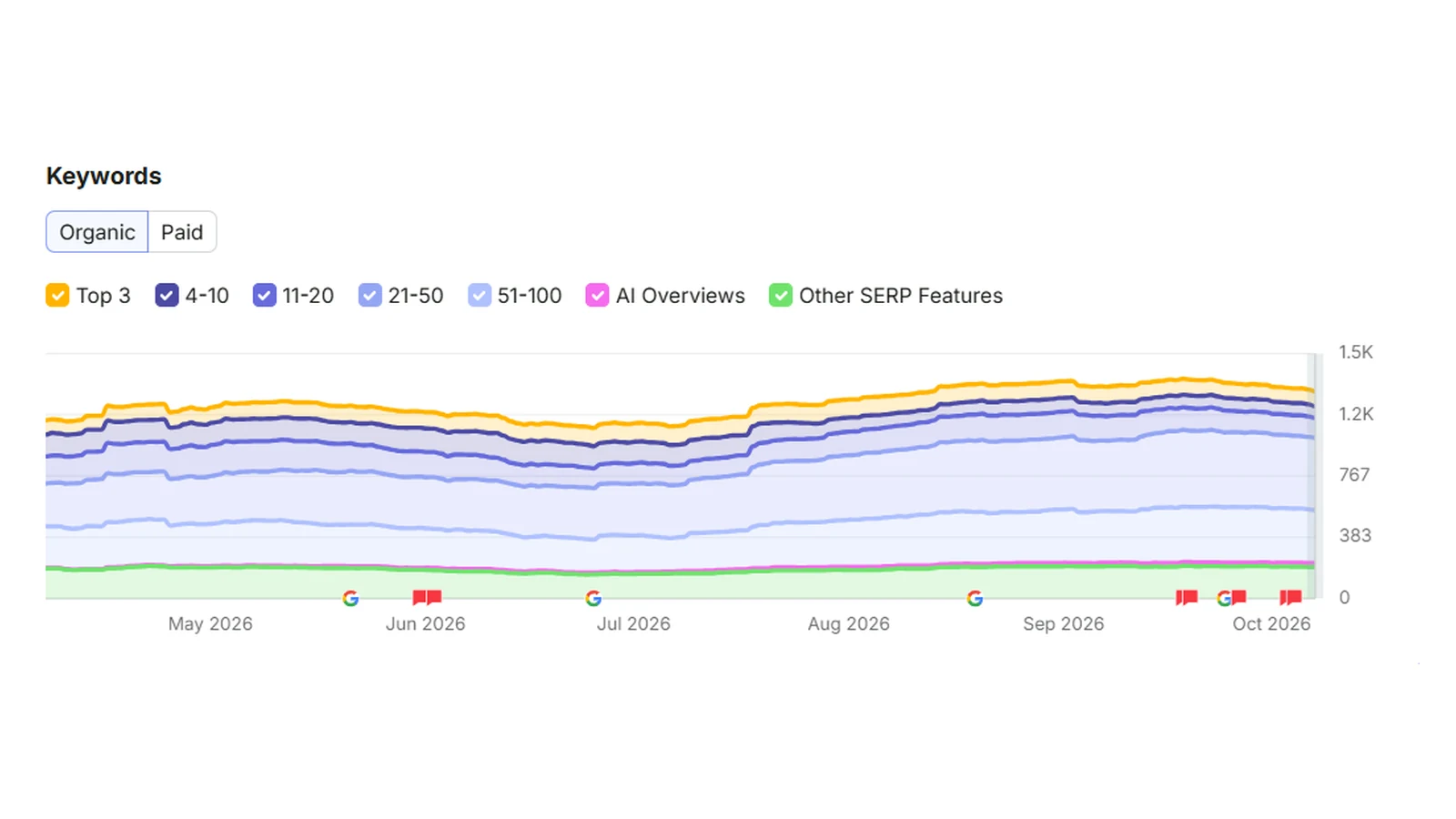
Organic growth for stores is rarely a straight line. On one outdoor and hobby e-commerce site, clicks rose 46.4% and impressions 72.6% over six months compared with the previous six. CTR dipped from 1.8% to 1.5% and average position moved from 8.3 to 9.2, because the site started appearing for a much wider set of queries (read the case study). Judge e-commerce SEO by clicks and revenue from the categories you care about, and expect ratios like CTR to move around as visibility broadens.
A decision framework by category
Split your catalog into categories and place each one in a quadrant based on two questions: how strong is your organic position today, and how much search demand is there?
| Situation | What to do |
|---|---|
| Strong organic, high demand | Defend with SEO. Test lower paid spend on non-brand terms and watch total category revenue. |
| Weak organic, high demand | Run ads now while you build the category page, internal links and content. Review the split every quarter. |
| Strong organic, low demand | Maintain. Little reason to add paid spend. |
| Weak organic, low demand | Low priority for both. Use ads only for specific promotions or high-margin products. |
Run this exercise with real data: Search Console clicks and positions by category folder, and Google Ads or GA4 revenue by product type. A spreadsheet with ten to twenty rows is enough to make the first decisions.
Worked example: why margin decides the split
Take an illustrative product that sells for $80. It costs $48 to buy, and shipping, packaging and payment fees add another $8. That leaves $24 of contribution before advertising.
- Break-even ROAS is $80 ÷ $24 ≈ 3.3x.
- At 4x ROAS, you spend $20 on ads per sale and keep $4.
- At 3x ROAS, you spend about $26.67 per sale and lose money on every order.
A 3x ROAS can look healthy in a dashboard and still lose money. Now put a $25 accessory next to it, where shipping and fees take a much bigger share of the price, and the math gets worse. This is why low-margin categories tend to belong to SEO, and why ads should concentrate on products where contribution margin leaves room for the cost of acquisition. Repeat customers change the equation. If you know your lifetime value, use it, with conservative numbers.
Common mistakes
- Judging paid by ROAS alone. ROAS ignores product cost, returns and fees. Contribution margin tells you whether a campaign makes money.
- Letting Performance Max take credit for brand demand. Automated campaigns can spend heavily on searches you would have won organically. Check search term and brand reporting where available.
- Thin category pages. A grid of products with no copy, filters creating thousands of indexable URLs, and no internal links from guides. These pages struggle to rank however good the feed is.
- Feed and site maintained by different teams with no shared standard. Titles get optimized in the feed but never on the page, or the other way around.
- Cutting ads the moment rankings arrive. Reduce paid spend in steps and watch total category revenue, since some paid clicks were adding sales on top of organic.
What we’d do first
- Audit the product feed and fix titles, attributes and price mismatches. This helps paid and organic at once.
- Pull revenue and clicks by category from both channels into one sheet.
- Calculate break-even ROAS for your top categories using real margins.
- Place each category in the quadrant above and set a 90-day plan for each.
- Pick two or three high-demand categories where organic is weak and start the e-commerce SEO work there: category copy, faceted navigation control, internal links and supporting guides.
- Where organic is already strong, test a reduction in non-brand paid spend on one category and measure total revenue, paid plus organic, for six to eight weeks.
Measure them together
Look at revenue by category across organic and paid, side by side, every month. Where organic is strong, test reducing paid spend. Where organic is weak but demand is high, use paid while building the category page. Let contribution margin guide the split. ROAS alone will mislead you.
The same logic applies beyond Google. Meta catalog campaigns can work well for products that sell on visual appeal: one fertilizer e-commerce account reached 6.04x purchase ROAS, with ₹72.46L Meta-attributed purchase value on ₹12.00L spend across 66 campaigns (case study). Treat platform-attributed figures as directional and compare them with your store’s own order data.
FAQ
Should a new online store start with SEO or ads?
Usually both, weighted toward ads at first. A new store has no rankings, so ads bring early sales and data about which products and searches convert. Get the SEO basics in place (site structure, category pages, product data) from day one so organic traffic can take over part of the load later.
Do Google Shopping ads help organic rankings?
Not directly. Paid spend doesn’t influence organic rankings. The indirect benefit comes from shared work: a cleaner feed and better product data help both, and ad data shows which products and terms convert.
Should we bid on our own brand name if we already rank first?
Test it. Competitors bidding on your brand, or Shopping results pushing your organic listing down, can justify brand campaigns. Pause brand ads in a controlled test and watch total brand revenue before deciding.
How long before e-commerce SEO reduces our ad spend?
It depends on competition, site health and how much work goes in, so nobody can promise a date. Most stores see category-level progress over several months. Reduce paid spend category by category as organic revenue proves itself.