
B2B SEO case study
Organic Search Visibility for a B2B Consulting Firm in the Construction Sector
A B2B SEO case study for a construction-sector consulting firm whose buyers search in many different ways: 2.1M impressions and 10.4K clicks in six months.
- Business
- B2B consulting firm, construction sector (name withheld)
- Market
- Construction projects, multiple locations
- Measured
- Last 6 months vs previous 6 months
10.4K
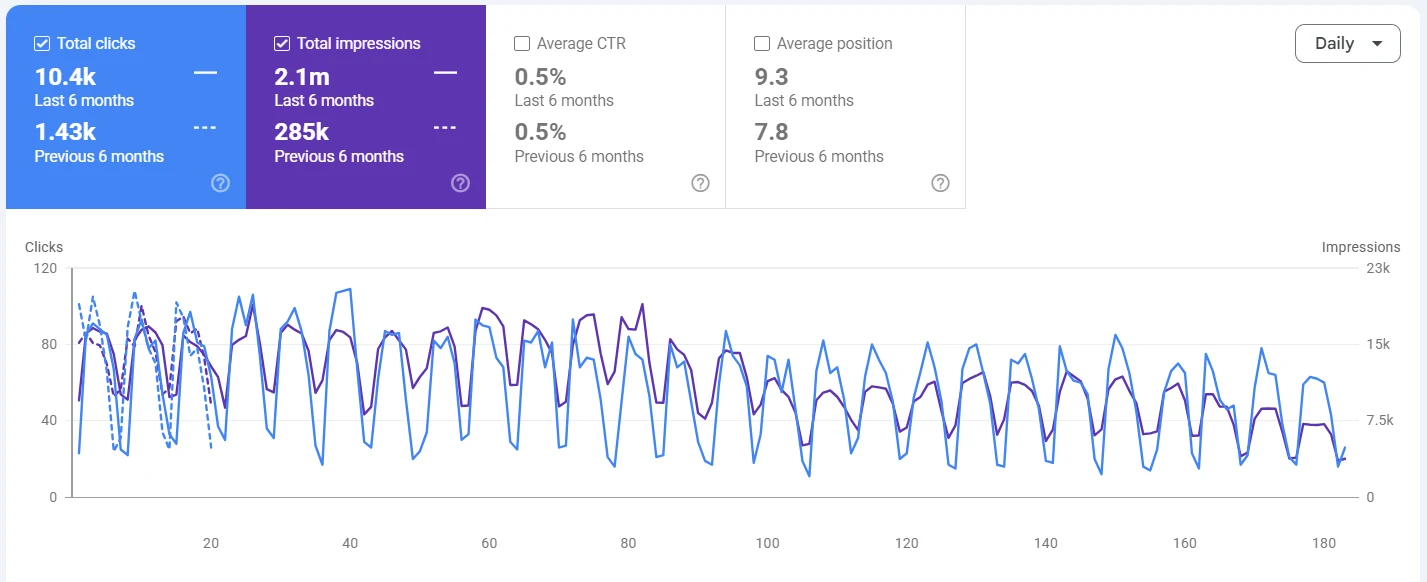
Google Search Console clicks during the latest six-month period.
2.1M
Google Search impressions during the latest six-month period.
+627%
Compared with the previous six months (1.43K).
+637%
Compared with the previous six months (285K).
Source: Google Search Console, last 6 months vs previous 6 months, as reported. Data for the earlier period is only available for part of it. CTR held at 0.5%; average position moved from 7.8 to 9.3. The business isn’t named.
The business
A specialized B2B service in a complex search market
The business provides consulting and compliance-related services for construction projects, including multi-location work. That makes this a professional services SEO case study as much as a construction one.
Its buyers search by the service they need, the type of project, the location, the compliance requirement, the construction stage, their type of organization, or the specific problem in front of them. That spreads demand across far more than one service keyword. Intent themes include, for example:
- construction consulting
- construction compliance services
- regulatory consulting
- compliance requirements
- pre-construction planning
- commercial construction consulting
- multi-location project support
- location-specific requirements
Examples of search-intent themes. We are not claiming rankings for these.
The starting point
Where we started: fragmented B2B search demand
The business operated in a specialized B2B category where search demand is split across services, project types, locations and regulatory requirements. The opportunity was to get the website found across all of those different kinds of search.
The Search Console baseline for the previous six months was 1.43K clicks and 285K impressions.
The challenge
What needed to change
Specialized service intent
Capture more of the specific services people search for, beyond one generic term.
Construction-related searches
Build visibility across the wider set of construction searches around the services.
How B2B buyers search
Match pages to how developers, contractors and owners actually search.
Topical relevance
Strengthen relevance around consulting, compliance and construction requirements.
Services and supporting content
Connect service pages with the content that explains the problems they solve.
Internal linking
Link related search themes so they reinforce each other.
Breadth without dilution
Expand visibility without relying on one broad keyword category.
Goals
What success looked like
- More organic clicks and search impressions
- Broader search visibility
- A stronger presence across specialized B2B searches
- Visibility across service and informational intent
- Sustainable coverage across a complex topic
Leads and revenue aren’t reported because those figures weren’t provided. Only search metrics are shown.
The strategy
From services to search intent
One broad term like “construction consulting” won’t carry a specialized B2B service. Buyers search by what they need, where they need it, what kind of project it is and which regulatory issue is holding them up. We built the site’s search architecture to match.
- Core services
- Search intent
- Service pages
- Project / industry context
- Location
- Supporting content
- Internal linking
- Organic visibility
What we did
Seven workstreams
What was done, and why a specialized B2B service business needed it.
Technical SEO
A site covering many services and locations needs a structure search engines can crawl and understand consistently.
- Crawlability and indexability
- Site architecture
- Canonicalization
- Metadata
- Technical page quality
- Internal linking
On-page SEO
Each page was matched to a specific search intent so related services didn’t compete with each other.
- Search intent and page relevance
- Titles and meta descriptions
- Heading structure
- Semantic relevance
- Service-page optimization
B2B service SEO
The core of the construction consulting SEO work was connecting specialized services with the language buyers actually use. A developer researching a compliance issue that is holding up a project and a contractor looking for a specialist in a specific city need different pages, both leading to the same service.
- Service
- Problem
- Project
- Industry
- Search intent
Content and topical coverage
Supporting content strengthened relevance around the subjects buyers research before they hire a specialist.
- Construction requirements
- Compliance topics
- Industry standards
- Project processes
- Project planning
- Location-specific requirements
Internal linking
Related services and informational content were linked so each reinforced the other, and readers had a route to the commercial pages.
- Core service
- Compliance topic
- Construction project topic
- Related service
- Contact
Location-specific search
Construction requirements often vary by location, so geographic intent matters even for a business that serves many areas.
- City and regional relevance
- Location-specific terminology
- Local requirement intent
- Wide service coverage
Authority and off-page SEO
Authority building ran alongside the on-site work, focused on relevance to construction, consulting and compliance.
Search architecture
How the search demand was organized
Consulting
- Project consulting
- Pre-construction advice
- Process support
Compliance
- Industry standards
- Compliance reviews
- Documentation
Project context
- Commercial construction
- New construction
- Multi-location projects
Location intent
- City
- Region
- Site-specific requirements
Google Search Console
Organic clicks and impressions grew sharply
Over the last six months the site recorded 10.4K clicks and 2.1M impressions, with an average CTR of 0.5% and an average position of 9.3.
Analysis
What the B2B SEO results show
- 2.1M impressions in six months. That is a very wide set of searches for a specialized B2B service.
- 10.4K clicks from that visibility, at an average CTR of 0.5%.
- Against the previous six months: clicks 1.43K → 10.4K (about +627%) and impressions 285K → 2.1M (about +637%), as reported by Search Console. Data for the earlier period is only available for part of it.
- Average position 7.8 → 9.3. The growth came from appearing for many more searches. Rankings did not improve across the board.
Daily clicks and impressions ease off through the period, as the chart shows. We’ve left that in.
Semrush
A large organic keyword footprint
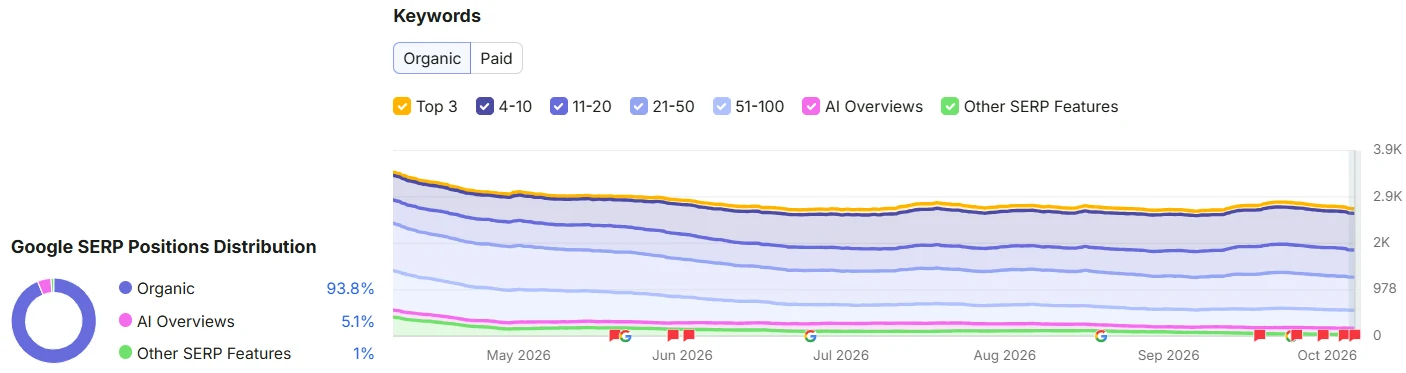
The Semrush view shows a large organic keyword footprint, between roughly 2.7K and 3.4K keywords across the period, easing gradually from April. In the SERP position distribution, organic listings account for 93.8% of tracked positions, AI Overviews 5.1% and other SERP features 1%. These are shares of tracked positions, not shares of traffic.
Market
Built around how buyers search
Searches for construction consulting and compliance services are highly contextual. They change with the location, the project type, the construction stage and the regulatory requirement. So the strategy planned pages for each of those contexts and didn’t treat the market as one keyword group.
The lesson
Specialized B2B SEO comes down to search coverage
For specialized B2B businesses, search demand rarely sits in one keyword. Customers search by service, problem, project type, location and regulatory requirement.
The work is building a site structure that covers each of those angles and still leads to the service page that converts.
Services used
SEO services used
- Technical SEO
- B2B SEO
- On-page SEO
- Content SEO
- Location-based SEO
- Internal linking
- SEO consulting & strategy
- Off-page SEO
Related
Related SEO services
See also SEO for professional services firms or all case studies.
Is your B2B website showing up when buyers search?
Specialized B2B services usually have far more search demand than one keyword covers. The first step is mapping how buyers search for your services, in your markets.