
B2B SaaS SEO case study
Building Organic Search Visibility for a Niche B2B SaaS Platform
This B2B SaaS SEO case study shows how a focused strategy gave a technology platform serving field-service contractors measurable visibility across product, software and use-case searches.
- Business
- B2B SaaS platform (name withheld)
- Market
- Field-service contractors
- Measured
- Latest 6 months vs previous 6 months
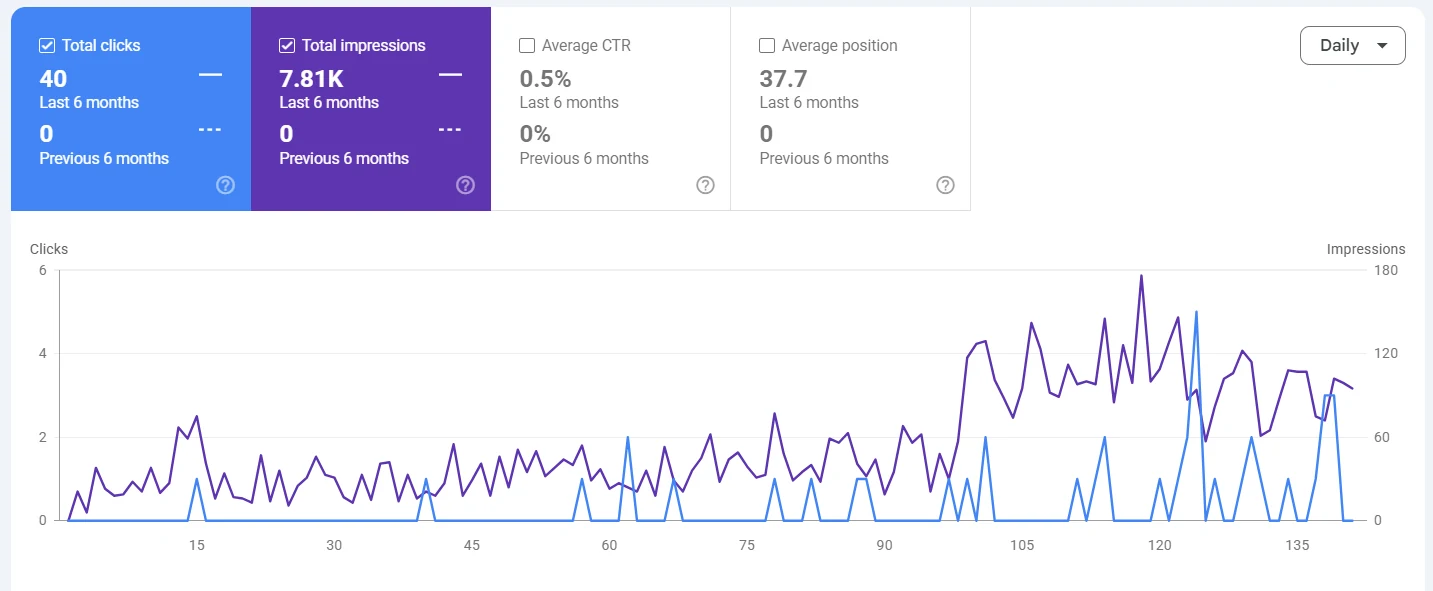
7.81K
Measured in Google Search Console over the latest six-month period.
40
Recorded in Google Search Console during the same period.
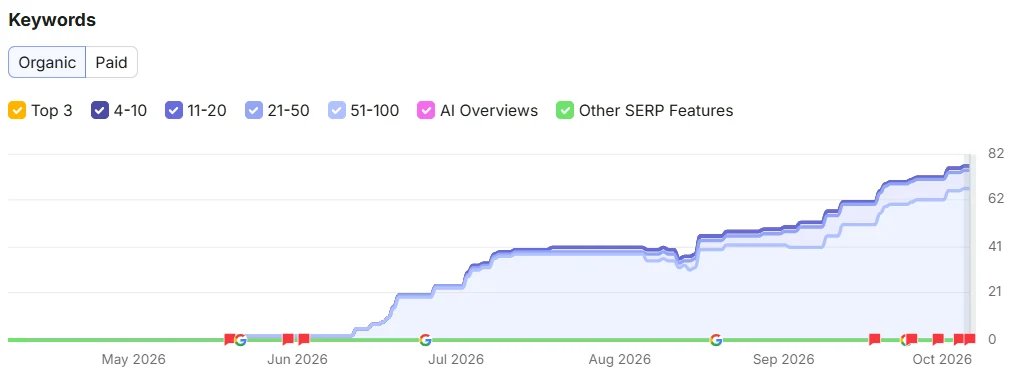
75+
Approximate organic keyword footprint in Semrush toward the end of the period, up from near zero.
Sources: Google Search Console (latest 6 months vs previous 6 months) and Semrush. The previous period recorded no measurable search activity, so no percentage growth is shown. The business isn’t named.
The business
A niche SaaS product in a specialized market
The business is a B2B SaaS platform for field-service contractors. It sits in a specialized software category, where buyers search with a mix of industry terms, software and category terms, product features, workflow problems and operational use cases.
That makes field service software SEO a specific problem. There is no single broad keyword to win. Contractors search for software by what they need to get done. Search-intent themes in this market include, for example:
- contractor software
- contractor CRM
- contractor estimating software
- field service management software
- job tracking software
- proposal software for contractors
- contractor invoicing software
- site audit software
Examples of search-intent categories. We are not claiming rankings for these.
The starting point
Where we started: limited measurable organic visibility
The previous six-month comparison period showed no measurable organic search performance in Google Search Console: 0 clicks and 0 impressions. That doesn’t mean the site had no pages or no earlier SEO work. It means there was no B2B SaaS organic search channel yet to measure.
With no mature channel to tune, the work started from the ground up: building measurable search visibility around the commercial and informational searches buyers in this market actually make.
The challenge
What needed to change
- Fix the technical SEO basics
- Improve page-level relevance
- Match pages to specific search intent
- Create clearer product and use-case search coverage
- Expand topical relevance
- Strengthen internal linking
- Build authority over time
- Establish measurable organic search visibility
The plan called for a search architecture where each part has a job:
- Product pages target commercial intent
- Use-case pages target specific problems and workflows
- Supporting content builds topical relevance
- Internal links connect related search intents
- Authority strengthens the domain as a whole
Goals
What success looked like
- Measurable visibility in Google Search
- Growing search impressions
- Growing keyword coverage
- Visibility across relevant B2B SaaS and industry-specific searches
- Website pages that match how buyers search
Rankings, traffic targets, leads and revenue weren’t part of the success definition, and none are claimed here.
The SEO approach
From product features to search intent
Broad category terms only take a niche B2B SaaS platform so far. We built the strategy around how field-service contractors search when they’re ready to buy, and tied each product capability to the searches it answers.
- Business offering
- Product capability
- User problem
- Search intent
- Dedicated landing page
- Supporting content
- Internal linking
What we did
Seven workstreams
What was done, and why a specialized B2B SaaS site needed it.
Technical SEO
A niche site has little margin for pages that can’t be crawled or understood, so the technical fixes came first.
- Crawlability and indexability
- Site architecture
- Metadata
- Canonicalization
- Internal linking structure
- Technical page quality
On-page SEO
Each important page was given a clear job: one search intent, matched in its title, headings and content.
- Page-level keyword targeting
- Matching each page to one search intent
- Title and meta optimization
- Heading and content structure
- Semantic and commercial relevance
B2B SaaS search architecture
The core of the work. Buyers in this market rarely search one broad term. They search for the task in front of them, so the site was organized around product, feature, use case, industry and problem, with supporting content underneath.
Use cases problem and workflow searches
- Estimating
- Job tracking
- CRM
- Invoicing
- Proposals
- Site audits
Content and blogs
Content was planned as part of the commercial architecture. Topics were chosen for search intent and topical depth, and each piece linked to the commercial pages it related to.
- Relevant topics for field-service contractors
- Search intent and topical depth
- Support for commercial pages
- Internal linking opportunities
Internal linking
Related pages were connected so search engines and users could see how the software category, its features, the use cases and the supporting content relate to each other.
Authority and off-page SEO
Authority building ran alongside the on-site work, focused on relevance to the industry and the product category.
Measurement and iteration
Google Search Console and Semrush were used to watch impressions, clicks, keyword footprint and overall search visibility, and to decide what to work on next.
Technical SEO
What the technical work was for
No technical audit screenshot is shown here; the diagram shows the sequence the technical work protected.
- Crawl
- Index
- Understand
- Rank
- Capture search intent
Google Search Console
Organic search visibility started building
Over the latest six months the site recorded 7.81K impressions and 40 clicks, against nothing in the previous six. The graph shows impressions building through the period.
Semrush
The keyword footprint expanded
Semrush shows the organic keyword footprint growing from near zero to more than 75 keywords by early October, with the main steps in late June and again from late August. Its position distribution shows 100% organic results and 0% in AI Overviews, so all of this visibility sits in Google’s standard organic listings.
Analysis
What the data tells us
- The previous GSC comparison period recorded no measurable organic search performance.
- The latest six-month period generated 7.81K search impressions.
- The site generated 40 organic clicks in the same period.
- Semrush shows a growing organic keyword footprint.
- The site moved from no measurable search visibility toward broader organic coverage. Average position (37.7) shows most of that visibility is still beyond page one, which is where the next stage of work focuses.
Before and after
No measurable GSC visibility before, a measurable search presence now
| Metric | Previous 6 months | Latest 6 months |
|---|---|---|
| Impressions | 0 | 7.81K |
| Clicks | 0 | 40 |
| CTR | 0% | 0.5% |
| Average position | No data | 37.7 |
Google Search Console comparison. The previous period recorded no measurable search activity, so a percentage growth figure can’t be calculated. Measured across the available six-month comparison period.
The lesson
Niche SEO requires search architecture
In SEO for SaaS companies in specialized markets, organic growth usually starts with understanding how potential customers describe their problems, workflows and software requirements, then building a site structure that gives those searches the right page.
Publishing more content helps less than getting the links between product pages, use-case pages and supporting content right.
Services used
SEO services behind the growth
- Technical SEO
- On-page SEO
- B2B SEO
- Content SEO
- Internal linking
- SEO consulting & strategy
- Off-page SEO
Related
Related SEO services
See also SEO for technology and SaaS companies or all case studies.
Building search visibility starts with the right SEO strategy
If your business operates in a competitive or highly specialized market, the first step is understanding how your customers search, and whether your website is built to capture that demand.